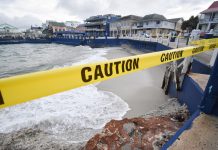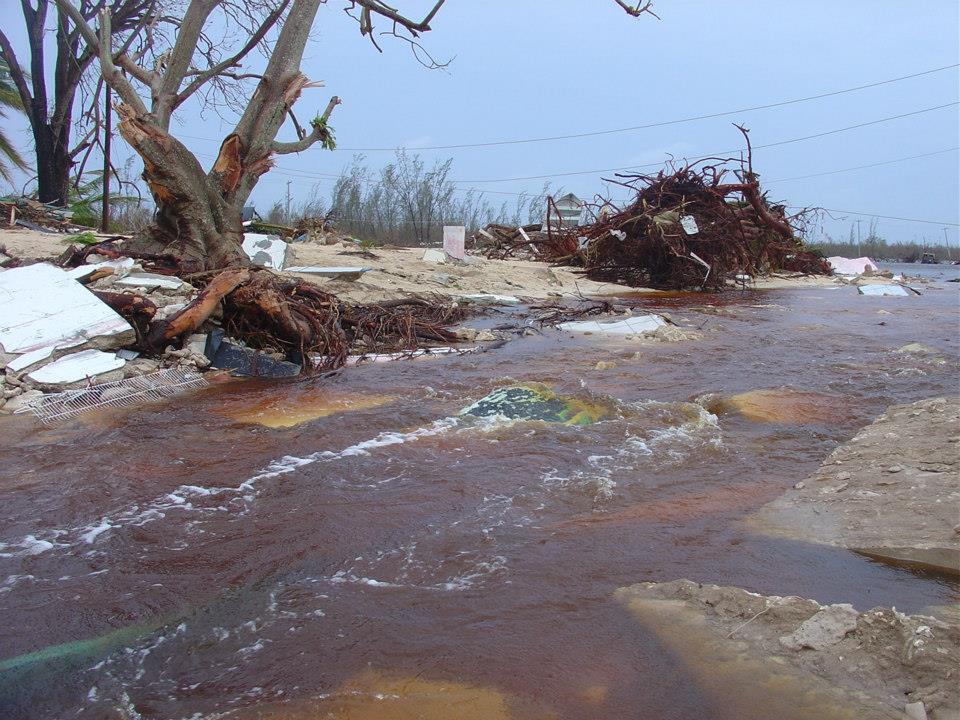
The Cayman Islands has been bumped up to a priority consideration for advanced storm surge modelling which will help to predict levels of risk across the territory.
The news comes as a weather expert said climate change is likely to cause greater storm surges, higher intensity hurricanes and fluctuating water availability throughout the islands.
The United States Agency for International Development’s Caribbean-wide programme helps to advance early warnings of storm surges and strengthen preparedness.
Premier Wayne Panton announced in a press release on Wednesday, 20 April, that his request to move to the first tranche of the project had been approved.
He said that the decision came due to the efforts made to secure the required model inputs including high-resolution seabed mapping and digital elevation models of coastal land areas.
Once under way, scientists will develop maps to assess and visualise storm surge risk, as well as strengthen capacity for early warnings.
State-of-the-art
Danielle Coleman, director of Hazard Management Cayman Islands, said storm surge is the deadliest hazard associated with tropical cyclones globally.
“Given our average height above sea level, storm surge is a particularly dangerous threat to the Cayman Islands,” she said in a press release.
“Having access to this state-of-the-art surge modelling will literally help us save lives in a disaster situation.”
Coleman added that with climate change the importance of having reliable, accurate surge modelling is of particular importance and urgency.
The premier said storm surge modelling will inform strategies proposed in the draft Climate Change Policy, expected to go to public consultation next month.
“Taking an evidence-based, multi-hazard approach to risk-mapping is essential to ensuring our communities are prepared to withstand the worst impacts of climate change,” he said.
“This is about saving lives, protecting livelihoods, and ensuring we are doing everything we can to safeguard the future of our islands for the generations to come.”
Climate change
The same day, a weather expert said the islands will experience greater storm surges, more intense hurricanes and fluctuating availability of water due to climate change.
Jamie Rhome, acting director of the National Hurricane Center, was in Grand Cayman as part of a visiting team of hurricane scientists and educators.
During an interview on Radio Cayman on Wednesday, 19 April, he stressed that climate change is happening and will inevitably affect the islands in a significant way.
“You can already see it manifesting itself here on the Cayman Islands in the form of rising sea levels and its impact on your shore properties,” he said.
“So, you know, you can go home and debate over your favourite adult beverage what’s causing it, but it’s absolutely happening. That’s an undisputed scientific fact.”
Rhome told radio host Orrett Connor that in the past there has been some misinformation about the effects of climate change, particularly on hurricanes.
“There’s often a notion that there’s going to be a dramatic increase in hurricanes associated with climate change, and the science just doesn’t bear that out,” he explained.
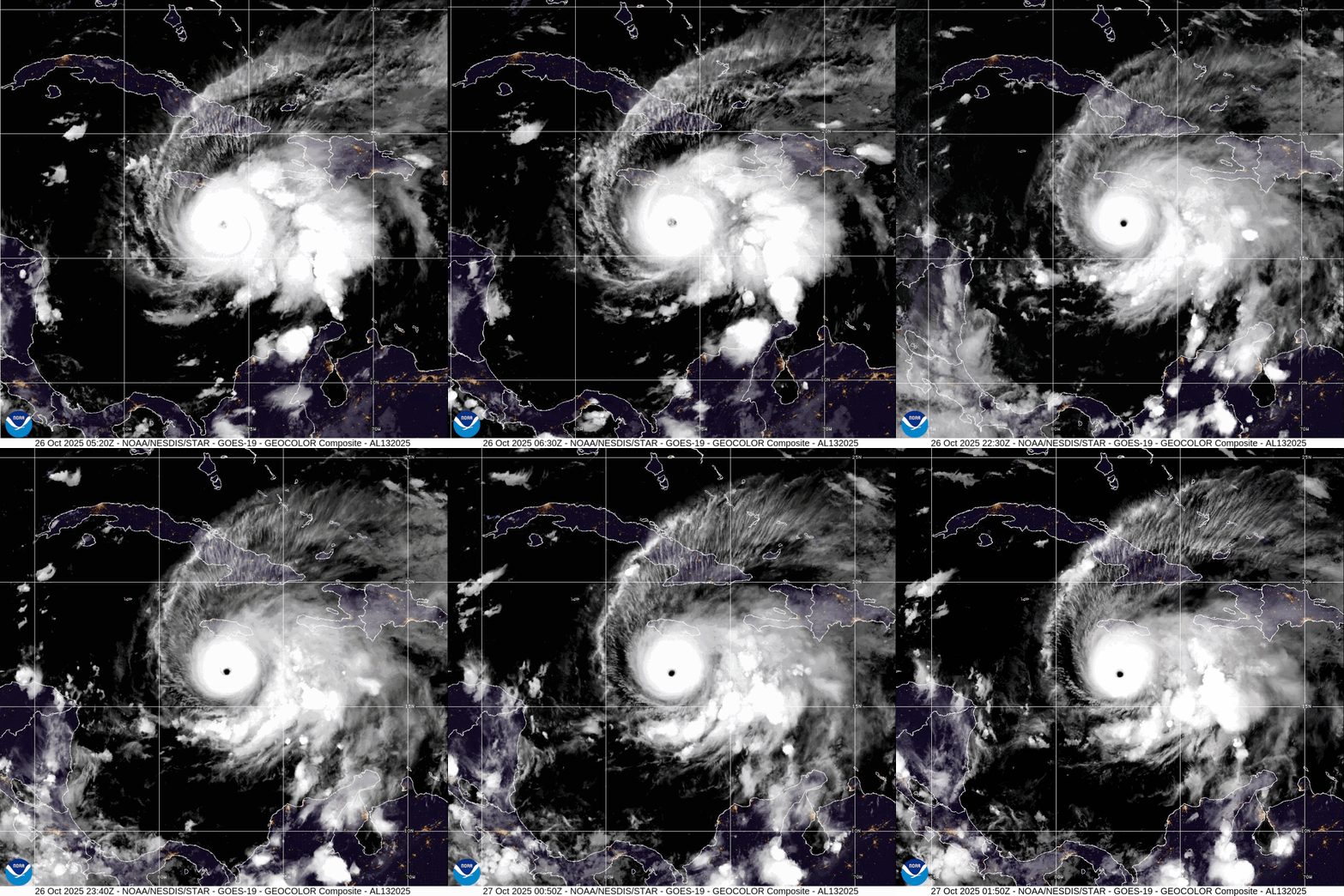
“It looks like we’re going to have about roughly the same number of hurricanes as time marches on, but their impacts are going to be worse.”
A walk along Seven Mile Beach shows Cayman’s vulnerability to storm surge is significantly worse, he said, so even the same storms with the same intensities are going to hit harder.
Rhome added that accessibility to water for washing, drinking and cleaning could also be threatened in the future.
“There’s a body of evidence that the storms may produce more rainfall – a warmer climate can hold more moisture and you get more rainfall,” he said.
“In a small island like this, you know, water availability – too much water at one moment, too little water the next moment – is a big outcome of climate change.”
Related Videos