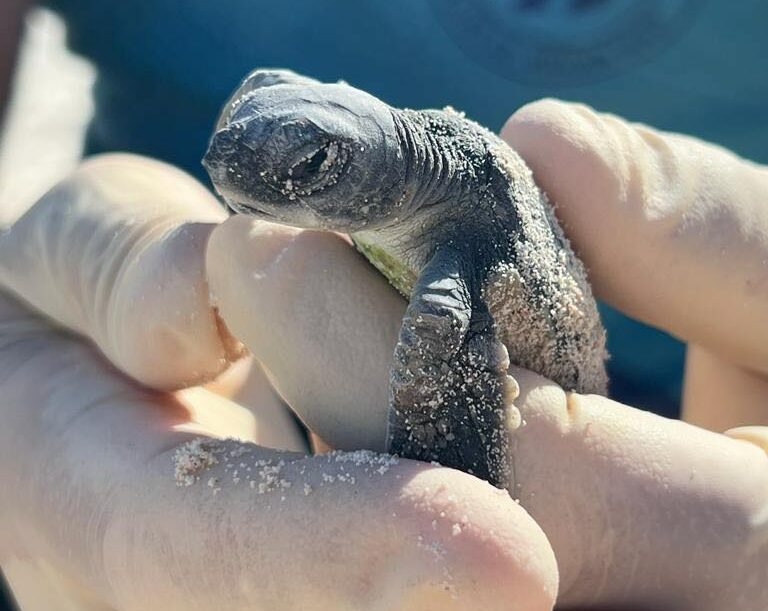
With the increasing pace of coastal development, artificial lighting has fast become one of the biggest threats to turtles during nesting season, leading to a rise in hatchling disorientation and deaths.
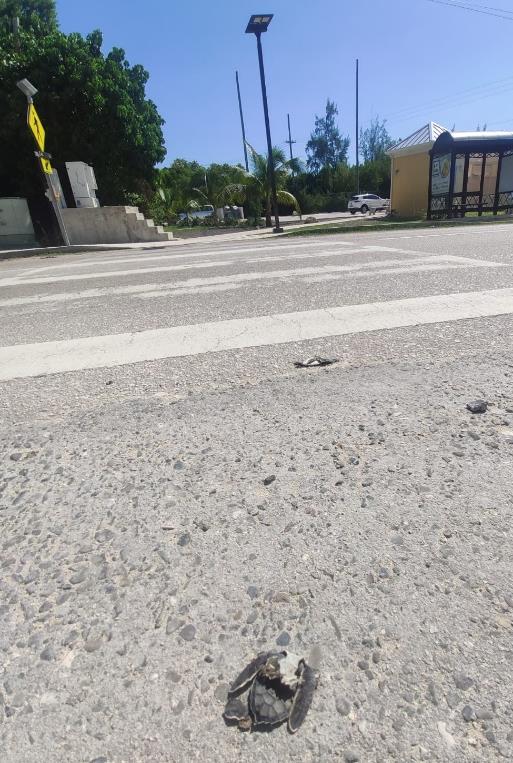
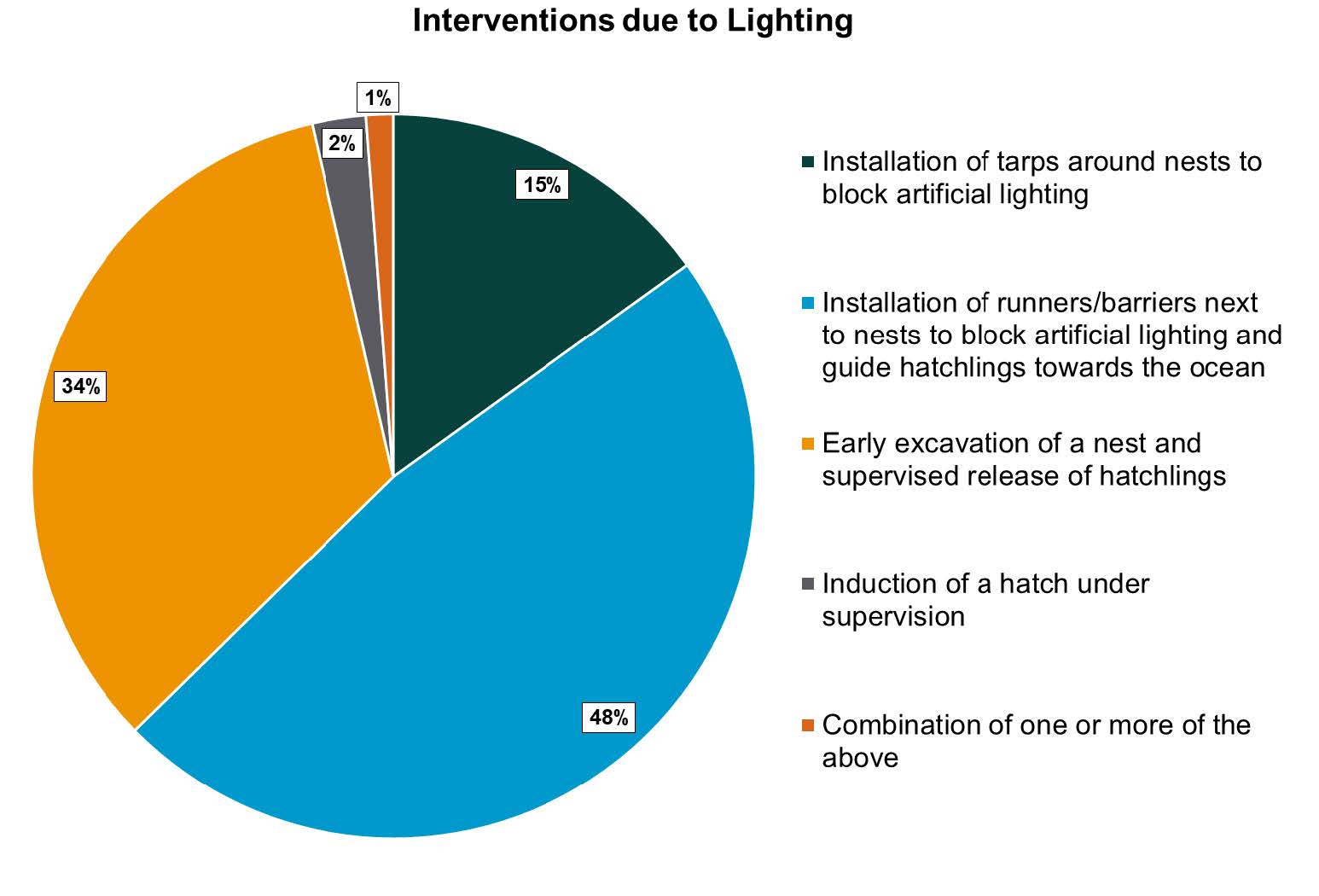
During the 2023 nesting season, 84% of the Department of Environment’s interventions with nests and hatchlings “were required solely because of artificial lighting threats and could have been avoided with turtle friendly lighting,” the DoE said in its report, ‘The State of Turtle Friendly Lighting in the Cayman Islands 2024‘.
The report, released last week, explains that artificial lighting can incorrectly orient nesting and hatchling turtles, preventing them from finding the sea.
The need for interventions to protect turtles is likely to continue increasing, the report said, with increased nesting activity, increased beach development, and increased presence and intensity of artificial lighting.
Encouraging turtle-friendly lighting
As need rises, the DoE report said the department is also facing resource limitations, like limited staff and available materials, that are making interventions unsustainable.
In an effort to reduce the impact of artificial lighting, the DoE is trying to promote turtle-friendly lighting and avoid the need for interventions.
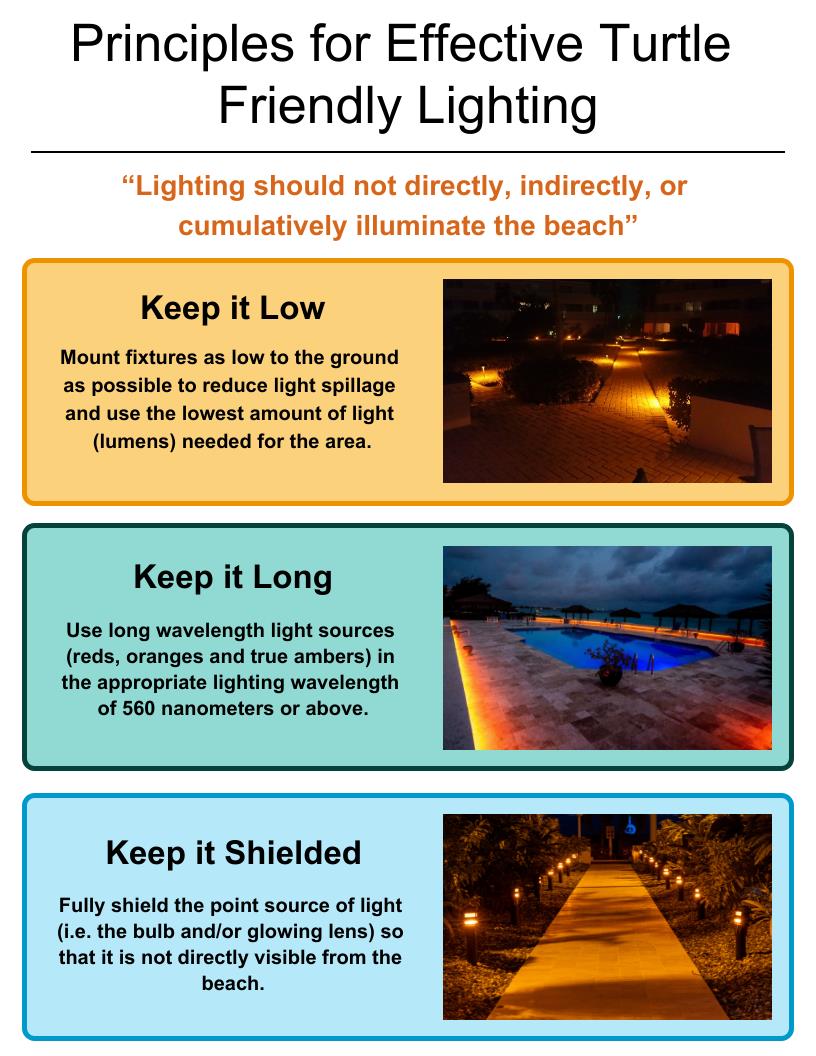
Turtles spend most of their lives underwater, so their eyes are attuned to blue, green and yellow wavelengths, the DoE report explained. That makes them less sensitive to red and amber wavelengths.
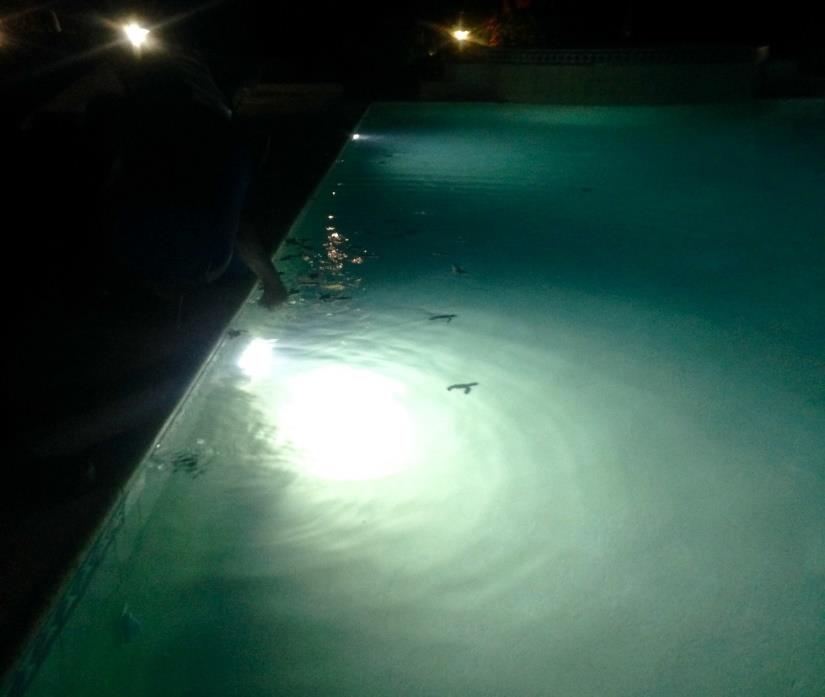
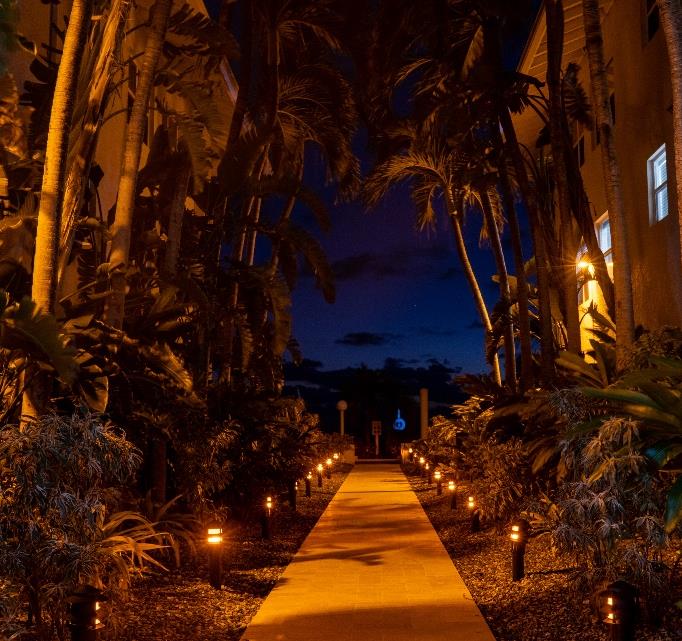
“Turtle friendly lighting uses long-wavelengths, giving them an amber appearance that resembles candlelight,” the report said, adding that using such lights are a proven solution to reduce misorientations and deaths.
A species conservation plan for sea turtles has been approved by the National Conservation Council and has been with Cabinet since 2019 for approval and action. To date, however, there has been no movement towards its implementation.
In the absence of this plan, the DoE has been working to protect nesting and hatchling turtles through its efforts to increase turtle-friendly lighting. Without the plan in place, however, the DoE said it “can only be implemented on a property level as opposed to beach-scale implementation”.
“This means that artificial lighting from neighbouring sources can undermine the efforts of turtle friendly properties. During the 2023 nesting season, 12% of interventions occurred at turtle friendly properties that were illuminated by neighbouring light sources,” the DoE report said.
The DoE said it hopes legislation requiring beach-scale implementation of turtle-friendly lighting is adopted via the Conservation Plan, “so that the efforts of turtle friendly properties are not undermined by artificial lighting from neighbouring sources”.
With the Conservation Plan for Sea Turtles delayed, the National Conservation Council, in August 2020, issued an interim directive for the designation of Critical Habitat of green sea turtles, loggerhead turtles, hawksbill turtles, leatherback turtles and all other species that may occur in Cayman waters, including Kemp’s Ridley turtles and hybrids, in accordance with Section 17(7) of the National Conservation Act (2013).
“Although the Conservation Plan for sea turtles requires designation of Critical Habitat on all three islands, the Interim Directive relates only to Critical Habitat on Grand Cayman, where the threats associated with development are greatest due to Grand Cayman having the highest volume of development proposals,” the report stated.
If the conservation plan is adopted, the report said, it is proposed that the locations of designated Sea Turtle Critical Habitat may be updated every five years to add or remove areas as appropriate.
Unknown nests increases risk
The DoE said every year since its turtle monitoring programme started, there have been recorded misorientations with the majority most likely “resulting in the death of hatchlings either from dehydration, exhaustion, traffic, or predation”.
“From the DoE’s turtle monitoring data, it was found that at least 25% of misorientations resulted in the confirmed death of one or more hatchlings during the 2023 nesting season. It should be noted that this number was produced with nests that had confirmed deaths (bodies found) and is likely an underestimation,” the report stated.
An increasing challenge for the DoE is the rise in unknown nests, which it said “are becoming more common as nesting numbers increase and beach area decreases”.
“Due to increasing beachfront development, erosion and sea level rise, turtles are having to nest closer together and, sometimes, on top of each other, increasing the likelihood of mistaking two nests for one,” the report stated.
It also pointed to the raking of beaches, which is becoming more frequent and can distort where nests are located.
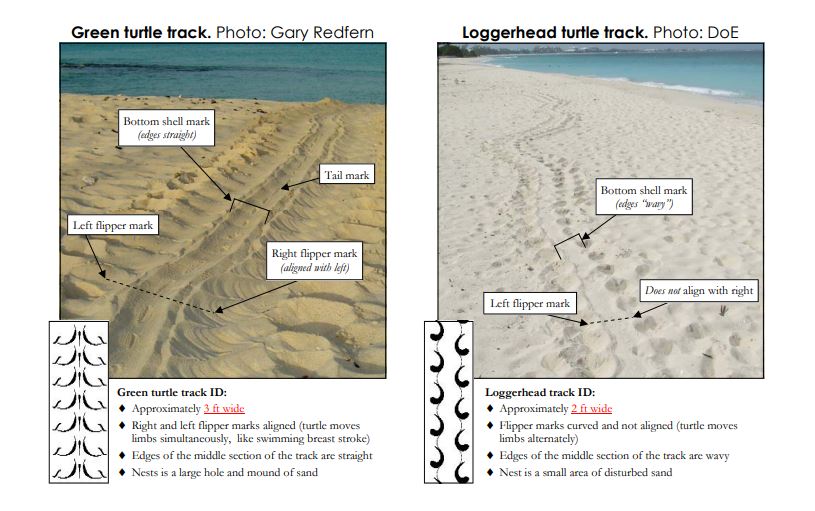
“The DoE is actively trying to address this issue with beachfront property owners/managers by providing brochures on how to identify tracks and nest pits so beach groomers can avoid them until they have been adequately recorded,” it said.
In 2023, the report added, 42% of the misorientations that occurred were from unknown nests.
“If the DoE had known about these unknown nests, an intervention would have been in place in order to prevent the subsequent misorientation. However, since these nests were unknown, at best the DoE may only be able to assist after the misorientations have occurred,” it explained.
Under the DoE’s Environmental Protection Fund lighting programme, 15 condominium complexes, one apartment building, one resort, three single family homes and 47 streetlights were retrofit with turtle-friendly lighting.
Turtle-friendly development
The DoE said the Central Planning Authority “has embraced and endorsed the protection of sea turtles via the installation of turtle friendly lighting” as it has included conditions for turtle-friendly lighting on Planning applications that may affect turtle nesting beaches.
It said a total of 41 developments have had conditions for turtle-friendly lighting on their Planning decision letters.
“Out of the 41 developments, 32 have prepared a Turtle Friendly Lighting Plan. As of 2024, four developments have been completed and have installed turtle friendly lighting in accordance with their plans,” the report said.
As of January 2024, 12 of the developments had no record of building permit issuance on the Online Planning System (OPS) and, therefore, it is presumed that construction has not started.
The DoE said it is reliant on the Planning Department, particularly the Building Control Unit (BCU), to ensure that a turtle-friendly lighting plan is prepared and submitted to the DoE prior to the issuance of a building permit.
The DoE is also reliant on BCU requiring an inspection to ensure that turtle-friendly lighting is installed before a certificate of occupancy or completion is issued.
“There are 33 properties that have requirements for turtle friendly lighting and have not been issued a Certificate of Occupancy. Therefore, there is still time for them to prepare and/or implement turtle friendly lighting and be in compliance with their Planning condition,” the report added.
The DoE said all lighting, including turtle-friendly lighting, should adhere to the general principle that lighting should not directly, indirectly or cumulatively illuminate the beach.
To learn more about turtle-friendly lighting, email the Environmental Management Unit at [email protected]
Related Videos