
Cayman’s National Conservation Council came out swinging in defence of the National Conservation Act on Wednesday as it raised objection to any amendments that would “dilute” its ability to “act effectively”.
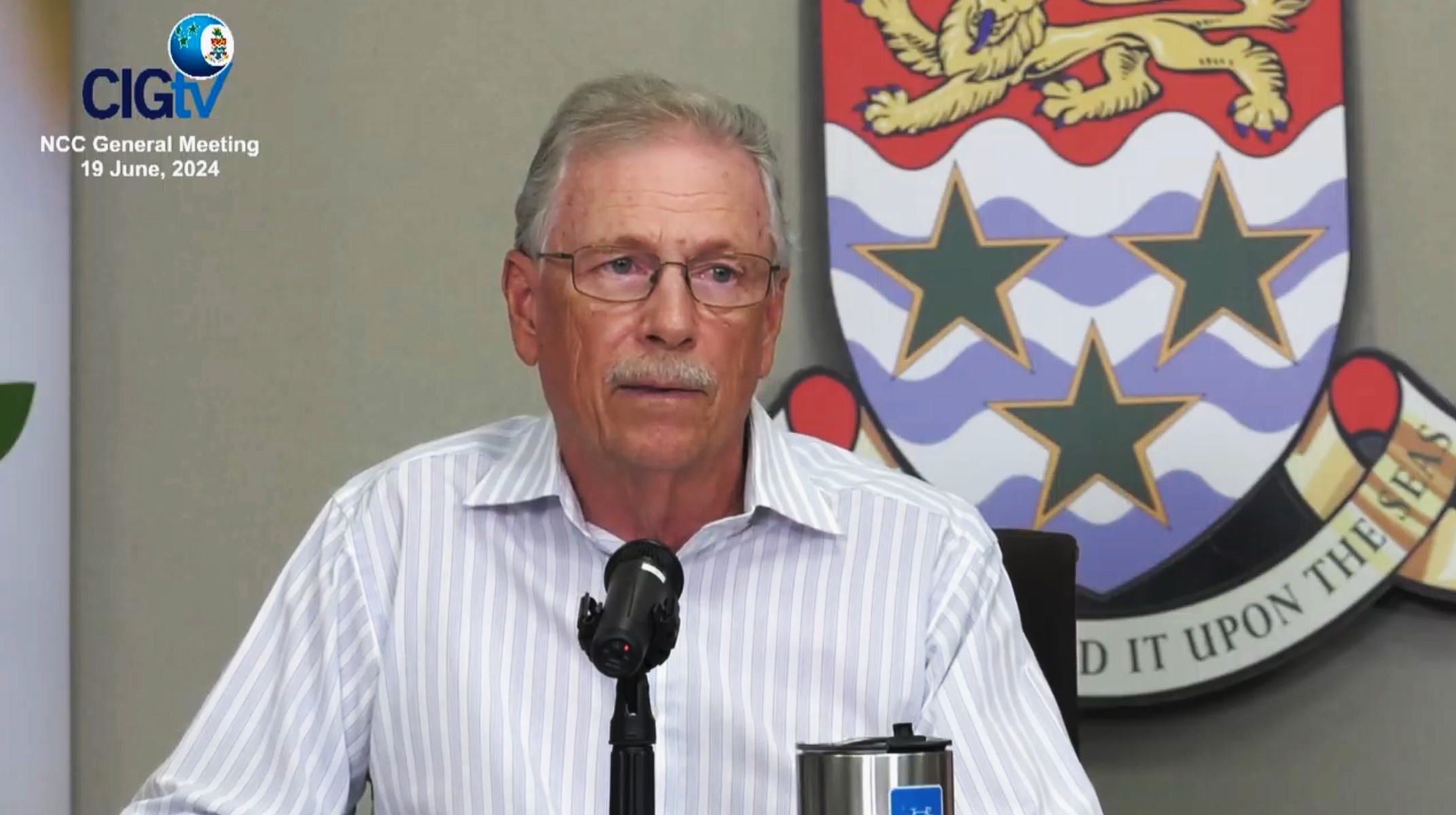
NCC chairman Stuart Mailer declared that the council is “resolute” in its belief that the various provisions of the NCA are “absolutely essential for the sustainability and viability of our country now and in the future”.
“Any amendments to the Act which dilute the council’s ability to act efficiently or that result in poorer conservation outcomes and a sub-standard environmental governance framework for the people and natural environment of the Cayman Islands are ill advised and are therefore strongly discouraged,” Mailer said as he addressed the issue at the start of the council’s general meeting on Wednesday afternoon.
Mailer, through the NCC statement, confirmed that the council “has not yet been formally or officially consulted” on any possible changes to the National Conservation Act.
There has been no official word from government on any proposed amendments to the law, however the Cayman Compass understands that the issue has caused a rift in Cabinet.
There has been talk of a Cabinet reshuffle and even resignations if the changes were to proceed.
The matter remained under discussion on Wednesday, with Premier Juliana O’Connor-Connolly and her UPM team still deliberating the proposed amendments.

One possibility, that could break the impasse in Cabinet without imploding the government, would be for the premier to allow a ‘conscience vote’ freeing the members who disagree with the proposals from their obligations to vote with their colleagues. It is not clear where that would leave the legislation, however, and if the rift exposed over this issue could be repaired.
Mailer expressed “grave concern” over media reports suggesting government was making significant changes to the existing law.
He contended that the council was “particularly concerned” about what appeared “to be a misinformation campaign” designed to discredit the National Conservation Act.
This campaign, he said, also appears to seek to discredit “the work of both the National Conservation Council and the Department of the Environment”.
No barrier to development
As Mailer defended the NCA, he said the council strongly believes the legislation “is extremely important” to collective efforts to preserve Caymanian identity and quality of life.
“There’s a growing body of evidence which shows that a healthy environment which is underpinned by strong legislative protections is a prerequisite for healthy people as well as a healthy economy,” he added.
As he lamented the lack of an updated Development Plan, Mailer also pointed to the recent passage of rainy weather and the resulting flooding of roads and residential areas as evidence of the need for guiding principles.
“The benefits of making evidence-based decisions to protect human life, property, the economy and the natural environment are obvious hopefully to all,” he said.
He added that, “despite the dire predictions of its detractors, the various provisions of the NCA have not in fact impeded economic growth and development since its passage in 2013. The official government statistics certainly bear this out”.
All of the provisions of the NCA, he contended, “embody the best international practice” such as the law’s use of precautionary principle.
This principle, he said, acknowledges the likely significant risk of adverse effects or “the potential for irreversible damage as reasons to fully consider the environmental implication of all our decisions and plans and to err on the side of caution when all the relevant information is not immediately available”.
This, he said, is why it is imperative that the competencies and expertise of the Department of Environment continue to be available to assist the council to execute properly and efficiently its “functions and duties”.
In addition, the requirements “for the majority of council members to possess relevant technical or scientific expertise” should remain a part of the law, he added.
Changes to these two areas in the NCA, the Compass understands, are also part of discussions around proposed amendments.
Mailer also outlined challenges to the council’s authority with most recent being an after-the-fact granting of permission for the construction of a road in an environmentally sensitive area in the eastern interior of Grand Cayman.
The NCC, he said, based on legal advice took a decision to file for judicial review of the Central Planning Authority’s decision “as it appears to be the only legal way to have the unlawful CPA decision quashed and reverted to them for proper consultation under the NCA and in accordance with the recent court of appeal judgment“.
“It remains our hope that a negotiated, rather than litigated, resolution can be achieved between the parties,” he added.
Law key to Cayman’s binding obligations
In making his case for the protection of the law, Mailer insisted that its passage in 2013 has enabled government to fulfill its duty under Section 18 of the Bill of Rights in the Cayman Islands Constitution Order.
“The National Conservation Act also enables the Cayman Islands Government to meet its commitments under several international multilateral environmental agreements included, but not limited to, the Convention on Biological Diversity and the Ramsar Convention on Wetlands,” he said.
It also enables the government, he said, to fulfill its responsibilities under the Cayman Islands Environment Charter, which was signed by the UK Minister for the Overseas Territories and McKeeva Bush on 26 September 2001.
“The Environment Charter includes guiding principles and a set of mutual commitments by the UK Government and the Government of the Cayman Islands in respect of integrating environmental conservation into all sectors of policy, planning and implementation,” he added.
Related Videos