Recent incidents of turtle nests being tampered with and hatchlings being impeded on their journey to the sea have prompted a strong warning from the Department of Environment.
“Sea turtles are a Part 1 Protected Species under the National Conservation Act (2013) and interfering with a sea turtle, nest or hatchlings in any manner is a criminal offence. Allowing hatchlings to emerge naturally is extremely important,” the DoE said in its public warning.
Jerrica Campbell, sustainability and environmental assessment officer and DoE Turtle Team member, noted recent concerning incidents in which there was evidence that nests were being interfered with.
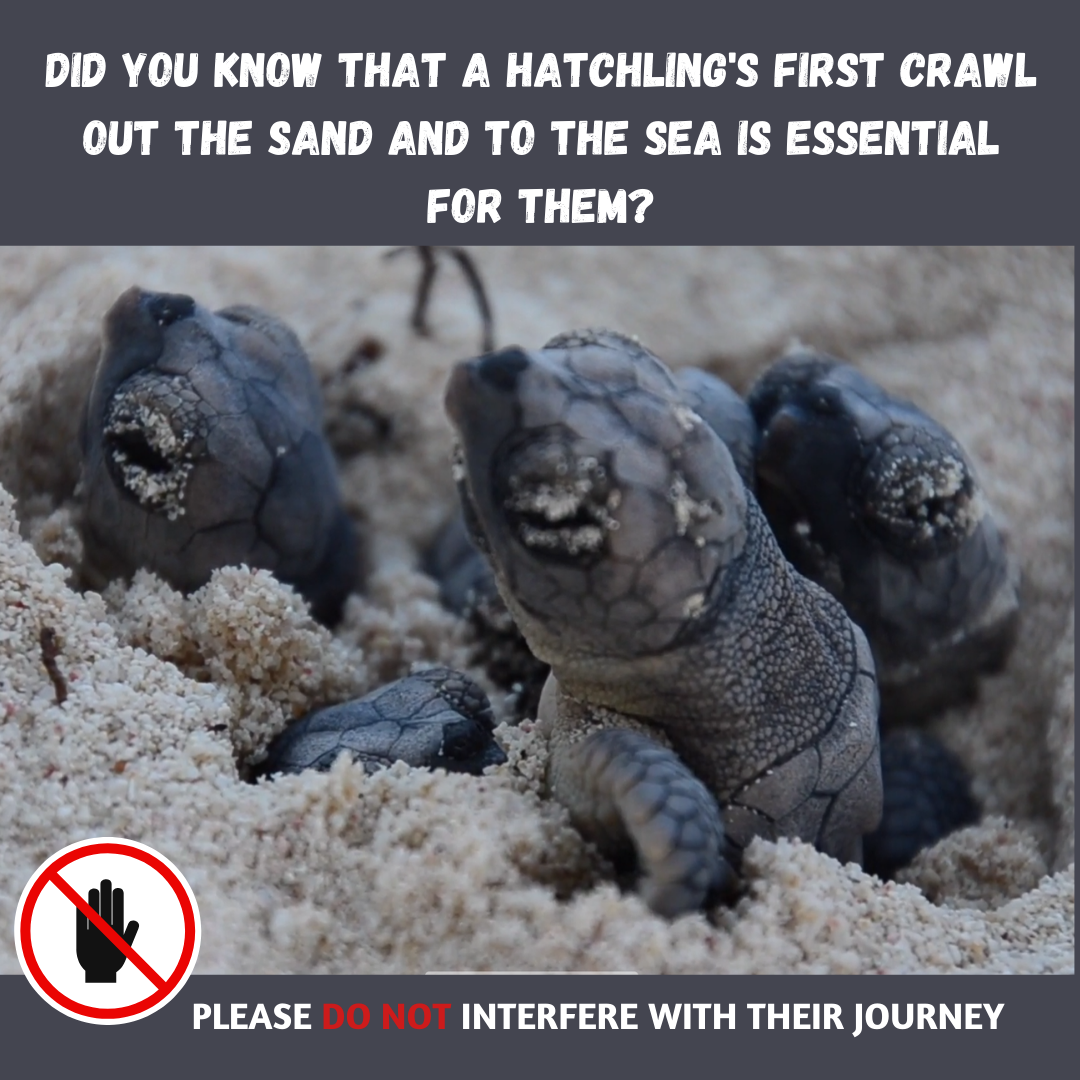
“During the DoE Turtle Team’s morning nest checks, it was obvious on two recent occasions that somebody had dug into the nests during the hatchling emergence the night before. Another incident occurred where a video was circulating of people using white flashlights on hatchlings on the beach and this caused them to become clearly disoriented,” she told the Cayman Compass via email.
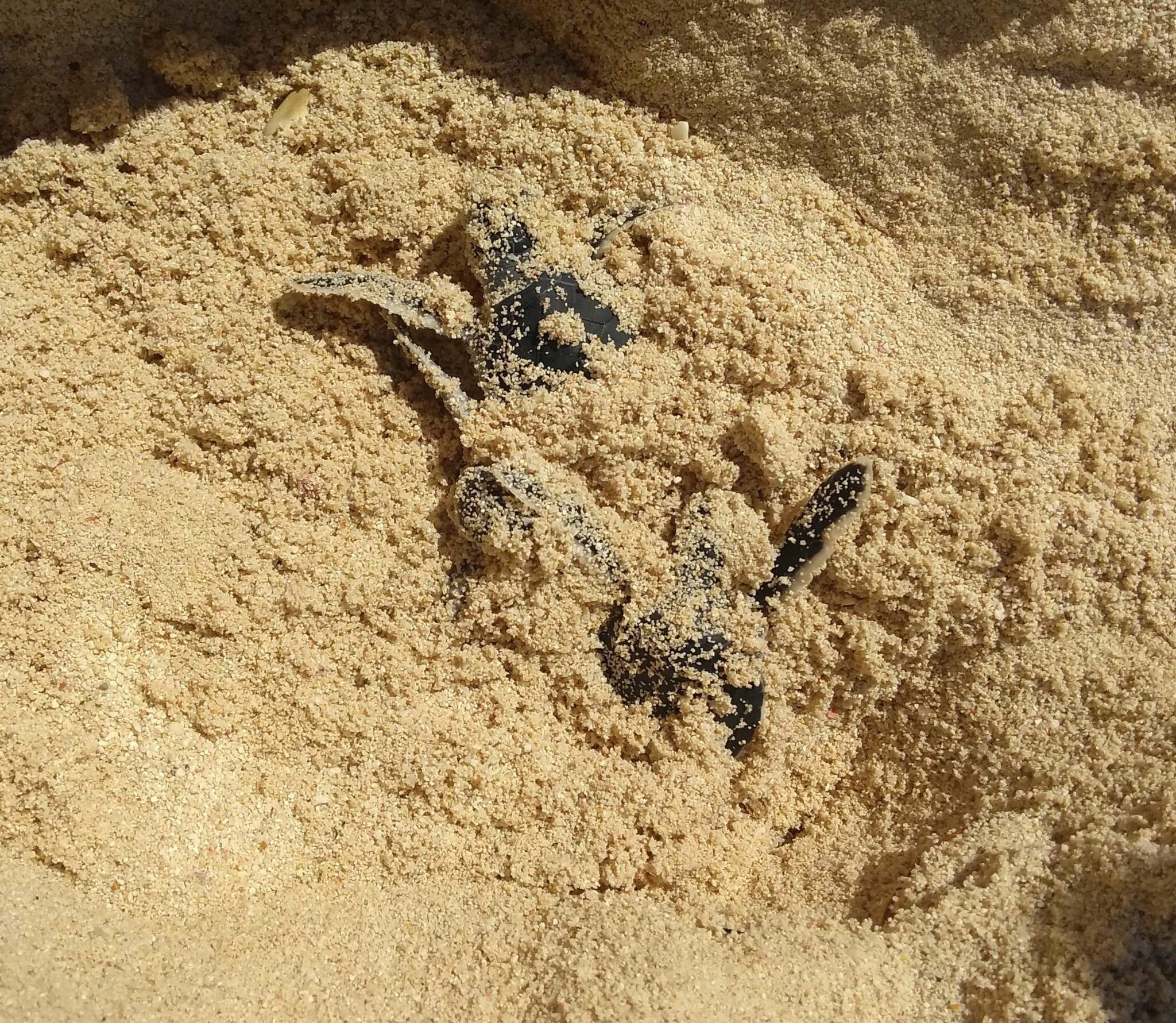
She explained that though people often think they are assisting hatchlings by helping them out of the sand, “this is not the case”.
“It is absolutely imperative that we allow them to climb, emerge and crawl down the beach from the nest on their own so they stretch out their muscles for swimming and can develop their instincts and prepare for the journey ahead in their own time,” she said.
For the nesting season to date, a lower number of turtle nests has been recorded on Cayman beaches after two record-breaking years in a row.
As of 26 Aug. this year, the DoE has recorded just 527 nests.
Last year, by around the same time, 810 nests had been counted across all three islands.
Though the numbers are lower this season, Jane Hardwick, Department of Environment sea turtle programme manager, was not worried by this change, saying that it is not surprising or concerning after 2022 and 2023 were very busy seasons.
Do not touch turtles, hatchlings
Only DoE teams are authorised to carry out interventions of wild nests which include digging out the nests.
The DoE, in its warning, told the public never to interfere with emerging sea turtle hatchlings.
“They do not need help and attempting to dig them out of the sand can cause more harm than good,” it said.
Leah Grant, DoE assessment and compliance Officer and Turtle Team member, said that it is an incredible gift to be able to witness processes of the natural world such as sea turtles nesting and hatching.
Contact the Turtle Hotline at 938-NEST (938-6378) at any time if you suspect a sea turtle, nest or hatchlings are in danger.
“While you enjoy the thrill of our sea turtles, please respect the importance of allowing them to exist undisturbed. The only exception where intervention is appropriate is if nesting or hatchling sea turtles are in imminent danger such as crawling away from the beach towards pools, buildings or roads,” Grant told the Compass in an emailed comment.
The DoE, in explaining the natural process for turtles, said during their final days in the sand, sea turtle hatchlings undergo straightening of the carapace (shell), absorb the final remnants of the yolk (their first food/energy source), and pick up chemical and magnetic cues that assist in developing their orientation and navigation abilities.
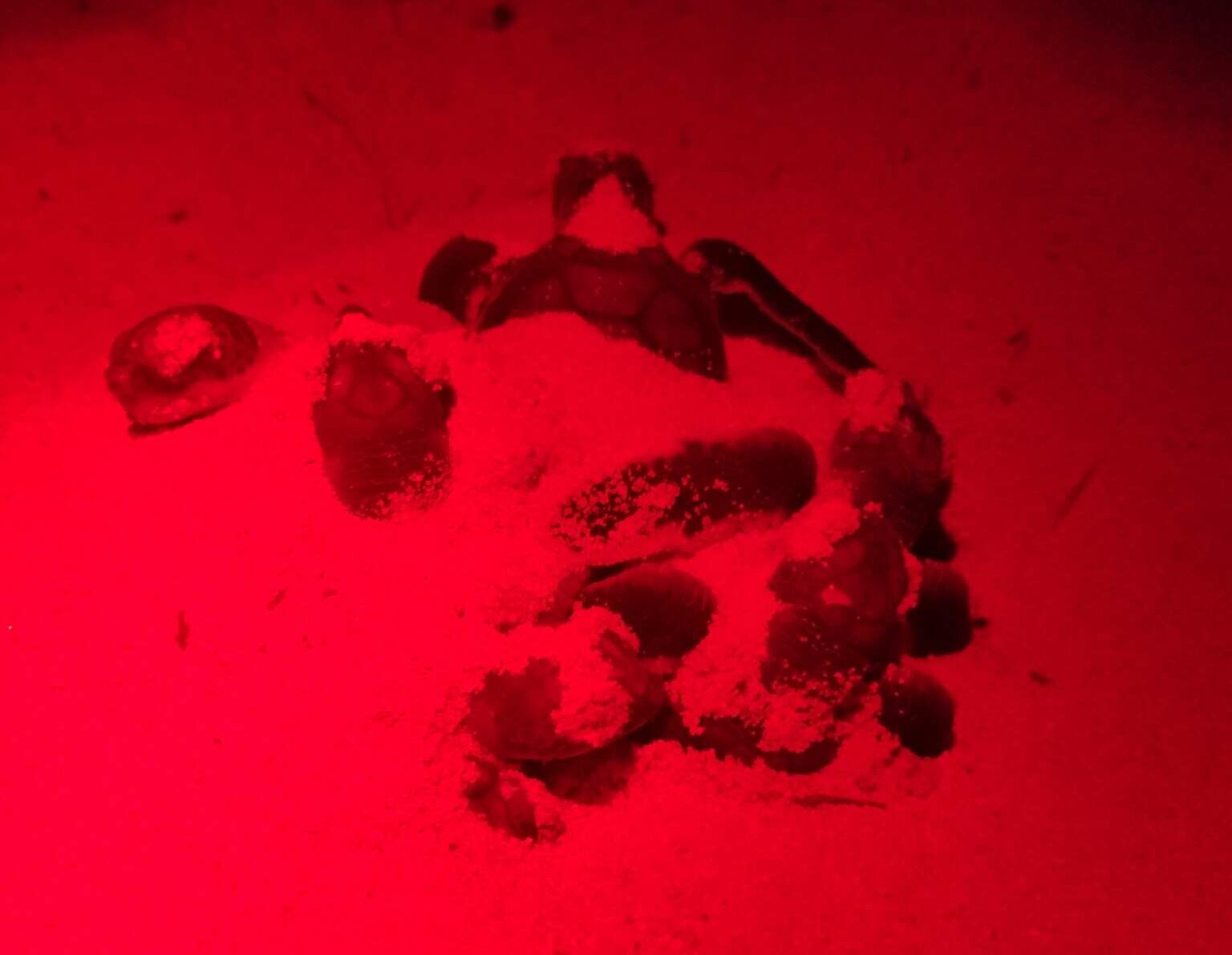
“The long term impacts of interference to this stage likely have a negative effect on their fitness and survival. Hatchlings often spend time very near to the very surface of the sand where they are resting until they feel a temperature cue to leave the nest. They are not stuck and they do not need help, they are waiting for the perfect time to emerge,” the DoE said.
Digging into a nest, the DoE said, alters the sand compaction and can prevent hatchlings that are deeper in the sand from being able to climb and emerge.
Additionally, it said, hatchling turtles are extremely sensitive to artificial lighting.
“If you are lucky enough to see an emergence, never use any light and give them plenty of space to make their way to sea. The only time intervention is acceptable is if hatchlings are in imminent danger e.g. heading in the wrong direction towards buildings, pools or roads,” the DoE said.
In such cases, it urged the community to immediately call the Turtle Hotline 938-NEST (938-6378) and its experienced team will assist.
Related Videos