

A road map for an affordable and sustainable housing policy will be tabled in Parliament this year, MPs have heard.
Jay Ebanks, the minister responsible for housing, said a national policy and a 10-year strategy would help people achieve home ownership, “the Caymanian dream made real”.
Speaking during Parliament’s Finance Committee on 13 Nov., Ebanks told the House, “Key features include transparent allocation criteria, shared equity, rent-to-own and deposit assistance, mixed-use and community-orientated developments, energy-efficient and hurricane-resilient construction, and affordable homes that are also affordable to maintain.”
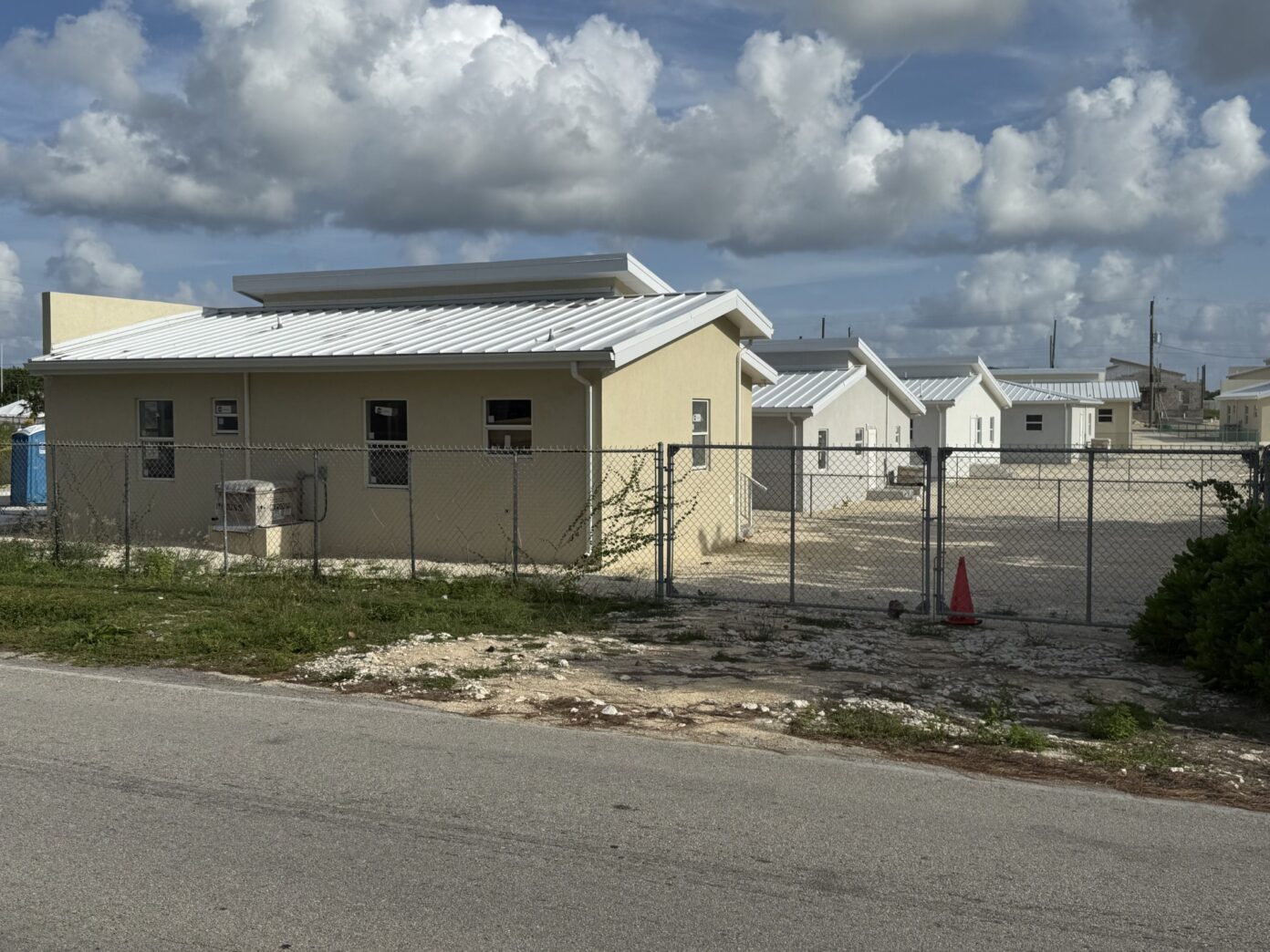
He added, “The home programme supports the first-time Caymanian buyer through the National Housing Development Trust. We continue to build new homes, refurbishing old stock and open service lots.”
Ebanks said the housing authorities had 1,152 applications under review since the start of May and that six families had received keys to homes at Flamingo Point in North Side.
“Housing is not just construction; it’s a legacy in equity and generational wealth. To achieve the strategic policy statement – the vision of sustainable development and infrastructure – this ministry requires adequate and responsible funding.”
He added: “Housing gives shelter and infrastructure gives communities lives.”
Ebanks explained that roads were a vital part of the puzzle, linking communities together and making commuting easier, and the National Roads Authority was always at work “paving, fixing, widening and building better roads island-wide”.
He said that priority road projects include the East-West Arterial, the Linford Pierson Highway, the Godfrey Nixon Way extension and the roundabout at the bypass near the King’s Sports Centre on Crewe Road.
Other planned road improvements include new lighted pedestrian crossings along with an integrated traffic-management system and speed cameras for traffic control and enforcement, he said.
“These investments save time, save money and save lives.
“To finish these projects, we will need funding. Half-built roads do not move people,” he said, adding that Finance Minister Rolston Anglin had made a commitment to the East-West Arterial in his budget speech, as had Premier André Ebanks.
Related Videos











Jay needs to drop some mobile homes in east end or the brac.
Maybe people can commute from the brac by sea to work on Seven mile beach everyday.
The ways to make a home more affordable are:
1. Less expensive land costs.
2. Smaller homes. Cost is highly correlated to size. Which also affects things like electricity costs for a/c.
3. Shared walls. Either by building multi-story condos or, at least, town houses with one or more shared exterior walls. Which also reduces a/c costs.
4. Better insulation. To reduce ongoing utility costs.
5. Less luxurious kitchens and bathrooms. No dishwasher. No granite countertops etc.
6. Let the prospective homeowner help with some aspects of the construction and finish. Painting, for example.
7. Government subsidies to allow a lower interest rate. Good idea.
Has this “blueprint” or strategy been unveiled by the Minister as promised?
Good design is not achieved through limitless budgets and ideal conditions. A well-designed house becomes a home, and there is a difference between the two.
A home provides shelter from the weather, but it also works with the weather. It responds to its environment and reflects the culture and lifestyle of those who live in it. I would like to see housing that is thoughtfully designed within realistic budgets—housing created by Caymanian architects who understand the unique conditions of the Cayman Islands and incorporate them into their work.
Let there be outdoor living spaces and generous windows that bring the outside in. Let homes take advantage of convection and cross-ventilation. Let houses not all be the same. Let the orientation of the sun and prevailing breezes determine where windows are placed. Let there be trees to provide shade, beauty, and relief from the heat.
Let homeowners have a say in the design of their homes. Let homes be adaptable and open to improvement over time. Perhaps there is no dishwasher initially, but there is a cabinet space designed to accommodate one later. Flexibility and adaptability should be built into the design from the beginning.
Even on a limited budget, thoughtful and sensitive design can make an enormous difference. It often contributes far more to a home’s livability than additional square footage or luxury appliances. Designing within constraints is not a disadvantage; it is an opportunity. When done well, it can transform the quality of daily life.
In terms of the infrastructure needed to support new residential developments, Cayman should pursue innovative solutions that are adapted to its own unique circumstances. Developing local building materials would be a tremendous step forward. Improving public transportation to the point where it becomes a preferable alternative to private vehicles should be an important goal.
Mixed-use developments that serve residents locally are essential. A public green space, a corner store, a coffee shop, an ice cream stand, outdoor gym equipment, a small public pool, a farmers’ market, or simply a gathering place with seating beneath a shade tree or a thatched roof—all of these contribute to a sense of community.
These are the signs of development that respects its inhabitants. They transform a house into a HOME—a place where life is enjoyable, where children can play safely, where activities naturally spill outdoors, and where strong community ties can form and flourish.