


While life on land grappled with heat, drought and development pressure, the surrounding waters, which represent more than 99% of Cayman’s national territory, told a quieter but still a very consequential tale.
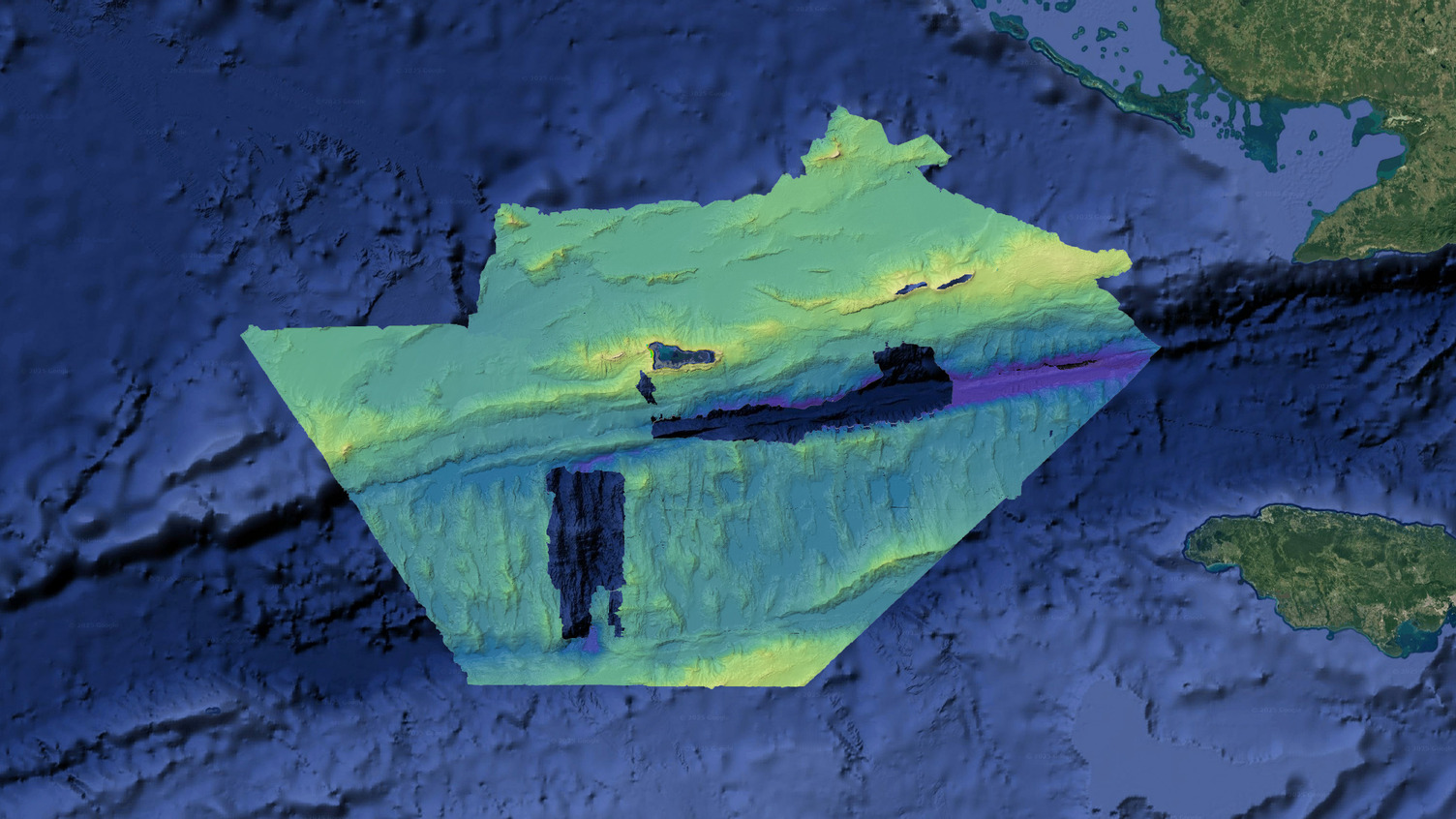
One of the most significant developments was the mapping of the seafloor around the islands, which will lead to a deeper understanding of the marine environment surrounding the Cayman Islands.
2025 went into the record books as a record-breaking year for sargassum. However, apart for a couple of weeks where significant mats came ashore, the actual impact on our beaches was relatively minor, with most of the seaweed passing the islands without accumulating along the shorelines.
In 2025, evidence continued to grow that our coral reefs are under stress, yet scientists from the Central Caribbean Marine Institute discovered that some corals are finding refuge from the warmer seas in deeper water.
Also, over the course of the year, there were several stories about endangered marine creatures being rescued, there were whale sightings off the northwest coast, and the autonomous Saildrone mission was completed, delivering a high-resolution map of the exclusive economic zone of the Cayman Islands.
Together, these moments formed a portrait of a marine environment under pressure, but still filled with wonder, mystery and beauty.
Sargassum: The seaweed returns
After two relatively light years, sargassum came back with force in 2025.
Satellite monitoring by the University of South Florida confirmed that the Great Atlantic sargassum belt reached record levels by late April, surpassing even the infamous 2022 bloom. By mid-May, thick mats were already washing ashore in East End, then creeping along the south coast of Grand Cayman and into the Sister Islands.
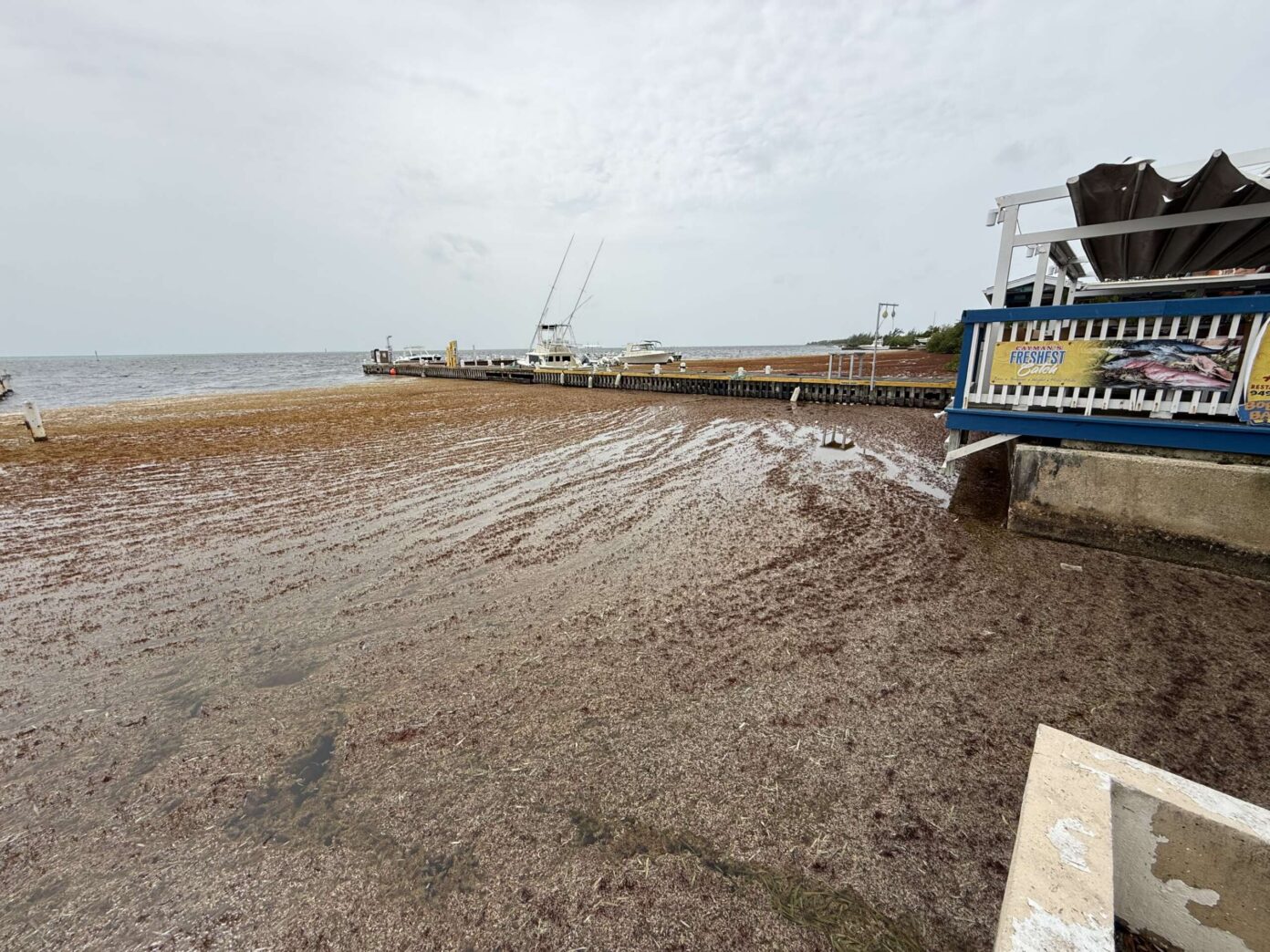
For residents and hoteliers in exposed areas, the impacts were immediate. Beaches were covered by the marine algae, boat ramps were choked up, and the unmistakable smell of decomposing seaweed hung in the air. By June, large accumulations were reported in Little Cayman’s South Hole Sound, affecting tourism properties in the Sister Islands.
The situation exposed a hard truth. Despite years of warnings, Cayman entered another heavy sargassum year without a national response plan. During a June parliamentary exchange, it was confirmed that no approved plan was in place, though a draft would be revisited.
Yet sargassum is not simply a nuisance. As the Cayman Islands Department of Environment pointed out, offshore it is a floating nursery, sheltering juvenile fish, crabs and even baby sea turtles. The challenge Cayman faces is learning how to manage what comes ashore without damaging what remains alive at sea.
Sea turtles
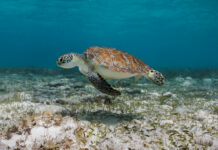
Sea turtles were never far from the headlines in 2025, often for the wrong reasons.
In February, Water Authority staff in East End rescued dozens of disoriented hawksbill hatchlings crawling across Seaview Road, drawn inland by artificial lighting. The nest they traced them back to turned out to be one of the largest hawksbill nests ever recorded in Cayman – 215 eggs, a rare and precious find for a critically endangered species.
But not all made it. Several hatchlings had already perished, underscoring how even small changes to beachfront lighting can prove fatal.
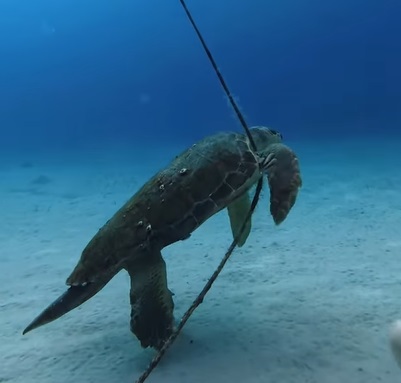
Later in the year, at Eden Rock, a large loggerhead turtle was freed by divers after becoming trapped on a mooring line; a stark reminder that turtles evolved millions of years ago, but have no instinctive understanding of ropes, hooks or modern infrastructure.
Despite these hazards, there was encouraging news: Cayman continues to record some of the highest sea turtle nesting numbers anywhere in the Caribbean, a conservation success built on decades of protection.
Rays and sharks
2025 also revealed how human activity sometimes impacts marine life. In April, a giant spotted eagle ray was saved by a quick thinking divemaster who cut away more than 70 feet of fishing line that trailed from its mouth. Weeks later, the story took a darker turn when a protected southern stingray was found deliberately killed near Barefoot Beach, in East End.
All sharks and rays are protected under Cayman law, yet entanglement, hooking and intentional harm remain persistent threats. The Department of Environment repeatedly urged fishers to use non-stainless steel hooks and to cut lines close to the hook when safe removal is not possible.
At the same time, scientists reminded the public that sharks and rays are essential regulators of reef health.
Fishing pressure, near and far
Fishing, a cultural cornerstone in the Cayman Islands, became a topic of national debate this year.
Discussion intensified over whether non-Caymanians should be licensed or restricted from fishing. Some residents insisted that declining catches made restrictions an increasing necessity, while others said fishing remained a vital means of survival for them in an increasingly expensive country.
Beyond Cayman’s shores, concern grew over a World Bank-funded initiative expanding longline fishing for highly migratory species in Jamaica. Cayman charter captains reported declines in mahi-mahi, once a reliable presence in local waters at certain times of year.
The issue highlighted a fundamental reality of ocean life – fish do not recognise borders. Sharks tagged in Cayman travel far beyond national waters. Marlin, tuna and mahi-mahi pass through multiple jurisdictions and overfishing in one place can ripple across the region and affect our lives here in Cayman.
Coral reefs: Decline and a glimmer of hope
Nowhere were the year’s contrasts more striking than on the reefs.
Shallow reefs around Grand Cayman and Little Cayman continued to show the impacts of repeated marine heatwaves, bleaching events and nutrient loading related to the use of shore based fertilisers, which eventually flush into the sea causing algae blooms which smother the coral reefs.
Live coral cover in some areas dropped sharply following the 2023 bleaching event and continued to show declines into 2025.
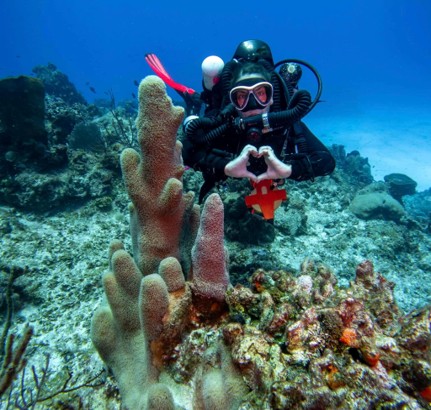
Yet deeper down, scientists found hope. Research led by the Central Caribbean Marine Institute revealed that mesophotic reefs, which are located between 100 and 150 feet experienced significantly less bleaching. Certain coral species were thriving in cooler, dimmer waters, suggesting these deep reefs may serve as critical climate refuges.
Meanwhile, technical dive teams exploring offshore banks, such as Pickle Bank and 12-Mile Bank, discovered healthy corals untouched by disease, including an example of the rare pillar coral, now believed to be nearly extinct in shallow waters.
These findings reinforce a crucial message – protecting only the shoreline is not enough. Cayman’s future reefs may depend on what survives beyond recreational diving depth.
Giants in the deep: Whales and the deep blue unknown
In May, two orcas were sighted off North West Point, Grand Cayman. This was not the first time these marine mammals have been spotted in this particular area. Eyewitnesses say they have been seen in this same location at the same time of year several times now.
The same deep offshore pinnacle off North West Point has also attracted sperm whales, and the theory was proposed that these whales possibly go to this location to feed on giant squid that live in the Cayman Trench.
These encounters offered a reminder of just how little we see of what lives beyond the horizon.
Beaked whales, pilot whales and oceanic whitetip sharks inhabit these deep blue waters that most Caymanians never visit, yet these creatures are also a fundamental part of our maritime identity.
Mapping the deep: A historic survey
Perhaps the most transformative marine achievement of 2025 passed almost silently offshore. Using autonomous Saildrone vessels, scientists completed a high-resolution mapping survey of more than 56,000 square miles of Cayman’s Exclusive Economic Zone; described as one of the most ambitious seabed surveys ever undertaken in the Caribbean.
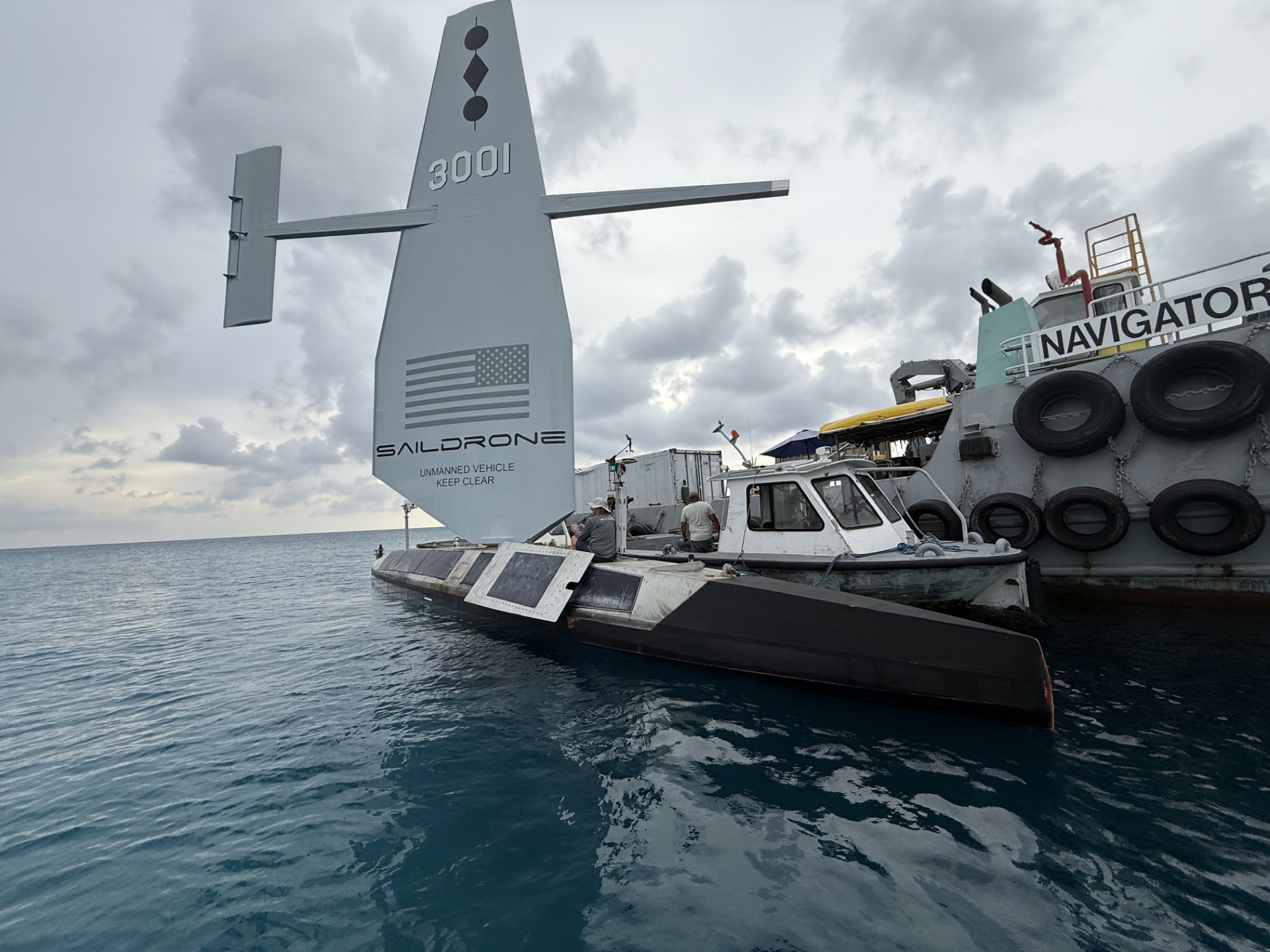
For the first time, Cayman now has a detailed picture of its underwater mountains, fishing banks and abyssal plains; from shallow shelves to depths exceeding 21,000 feet in the Cayman Trench.
This data will reshape everything from marine conservation and fisheries management to disaster planning and navigation safety.
For a nation defined by the sea, it marked a leap from speculation to knowledge.
Engineering and infrastructure projects
2025 also underscored how dependent modern Cayman is on what lies beneath the waves.
Government advanced plans for a new subsea fibre-optic cable to safeguard digital connectivity, and Liberty Networks announced a multi-million-dollar upgrade of the existing MAYA-1 subsea cable, which is expected to boost internet speeds and reliability in the Cayman Islands.
At the surface, a new $5-million harbour crane arrived in December, a critical piece of port infrastructure that will help ensure efficient handling of imports into the islands.
Finding balance
Cayman’s seas are resilient, but clearly not invincible. They still surprise us with orcas, healthy deep reefs and recovering turtle populations, yet it appears they are significantly shaped by choices made on land, by regional decisions, possibly beyond our control, and by whether knowledge leads to action.
In 2025, we now know more ever about what lies beneath our waters, especially the deep-sea environment, but going into 2026, the government will likely face hard decisions that could impact whether future generations of Caymanians will still be able to find a conch, a lobster and a fish for dinner and possibly even whether we will have healthy coral reefs.
Related Videos






NOT ONE word about the erosion of sand on SMB, or what to do about it. Sad.