


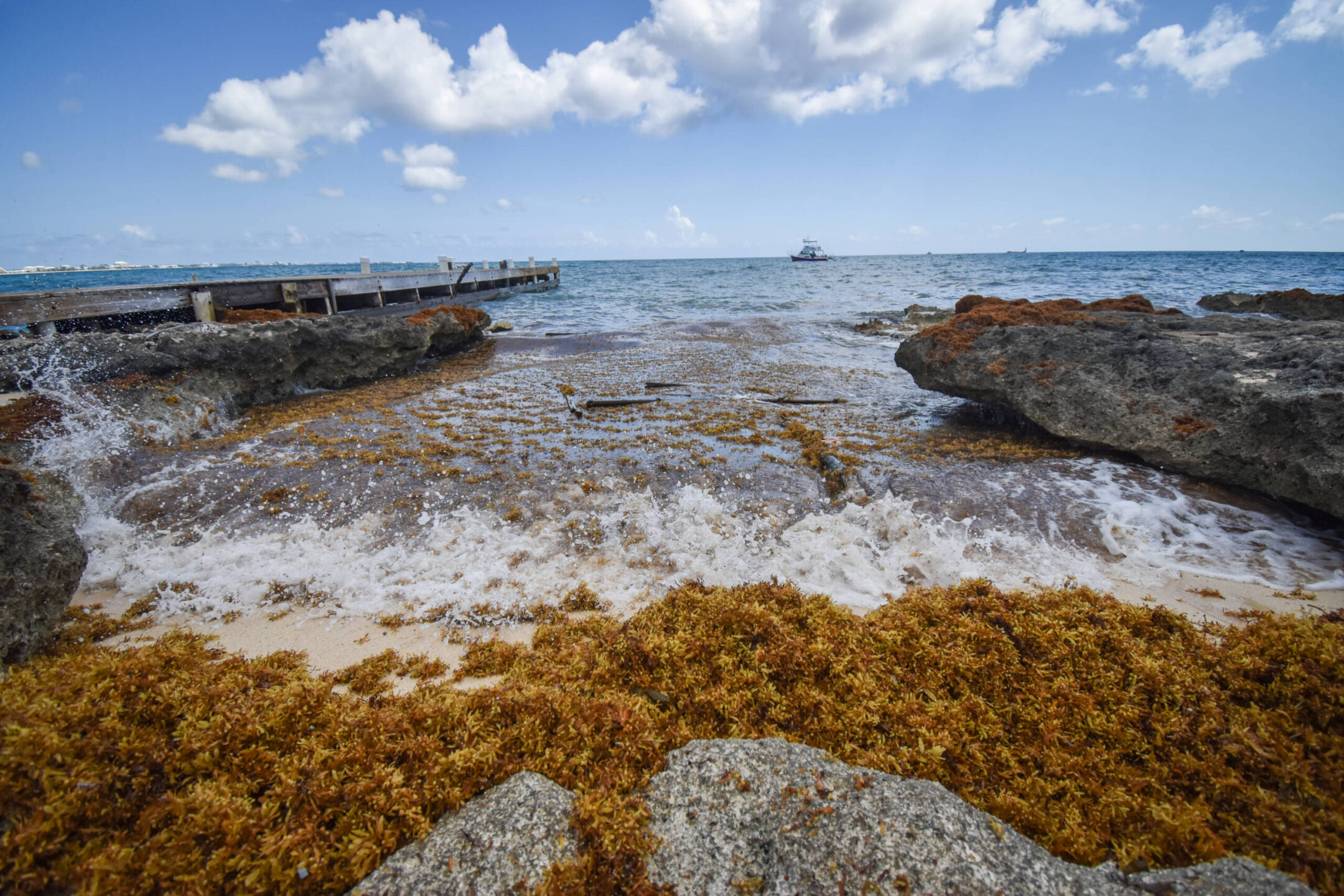
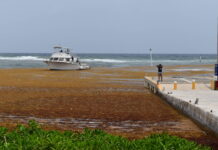
As the all-too-familiar sargassum blooms wash up on local coastlines, the Department of Environment is advising caution during turtle nesting season.
The resurgence of sargassum has become an annual phenomenon, especially during the summer months.
“Sargassum influxes will vary year on year, with some being larger and some years seeing fairly low impacts. Coastlines facing prevailing wind and currents with generally receive greater influxes,” the DoE explained.
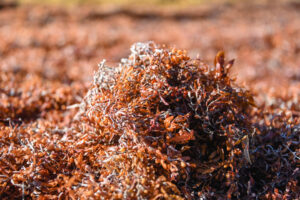
Researchers have said 2022 will be another year of major sargassum blooms, particularly in the Gulf of Mexico and in the Florida Keys and along the east coast of Florida.
Impact on turtles
This could mean trouble for wildlife like turtles and their hatchlings.
“Unfortunately, the season for sargassum coincides with turtle nesting season so when there’s a lot of sargassum it can have some pretty serious effects on turtle nesting. In addition to creating an obstacle for the nesting turtle as she emerges from the water, inappropriate removal efforts using heavy equipment can also compact the sand potentially impacting nests or making it difficult or impossible for turtles to dig a nest,” the DoE said.
Added to that, the DoE said, compacted sand can also prevent the nest from getting enough oxygen, trap heat, and impede the hatchlings’ ability to dig.
Keeping the beach sargassum-free
Vince Ramgeet, supervisor of heavy equipment in the Recreation, Parks and Cemeteries Unit told the Compass he and his team are mindful of the nesting season and co-ordinate with the DoE as they go about clearing local beaches.
In cases where DoE advises the beach is an active nesting place, Ramgeet said, his team will not go into the area to clear it with equipment.
The DoE requires individual property owners seek permission before commencing any mechanical clearing work on the beach, to “confirm if the beach is a nesting beach and [receive] a letter of approval for mechanical clearing if required”.
The department said approval letters are usually processed within one day.
Sargassum here to stay
Pelagic sargassum is a brown algae, or seaweed, that floats freely in the ocean and never attaches to the ocean floor. These free-floating forms are only found in the Atlantic Ocean.
“Initially, it was thought the sargassum we’re seeing originated from the Sargasso Sea and traveled on ocean currents, moving on a south westward trajectory, into the Caribbean. However, by back-tracking the movement of sargassum from 2011 using ocean models, satellite trackers, and examining high resolution satellite images, scientists now understand that the recent influxes to the Caribbean are related to massive sargassum blooms occurring in the equatorial area of the Atlantic,” the DoE explained.
This is an area where the ocean currents rotate in what is referred to as the North Equatorial Recirculation Region (NERR), and is not directly associated with the Sargasso Sea.
“It is essentially a new ‘source’ region for sargassum,” the DoE added.
The agency said that most sargassum will “eventually move away on its own”. It advised raking the beach to avoid “removing large quantities of sand” and disposing of the seaweed in a suitable location where it can dry out and decompose naturally.
“We always want to screen out sand as much as possible so it stays on the beach and lessens the impact on sand volumes,” it added.
Regional solutions focus on emergencies
The DoE said there is a regional network of countries within the Caribbean, of which Cayman is a part, but they are primarily focussed on emergency response.
“Thankfully, Cayman hasn’t had the levels of sargassum to incite emergency response but there are many resources for us to access should the need arise,” it explained.
Government has previously convened a cross-ministry ‘Sargassum Task Force’ which “dealt with organising Cayman’s initial response to severe Sargassum influxes and may be reconvened in the future to address worsening trends or policy changes,” according to the DoE.
Their statement said the department also works with property managers, beach cleaning companies, hotels and resorts and others to ensure responses to sargassum are carried out with as little environmental impact as possible.
To contact DOE about sargassum issues you can email [email protected] or find more information on the DoE website https://doe.ky/sustainable-development/best-practices-guides/sargassum-removal/
Related Videos








Once sargassum reaches sand it becomes much harder to remove. While it’s still floating, slurry pumps can suction about 800 gallons per minute straight into containers or discharge to a specific location on the beach up to 1,000 feet away. The investment in pumping technology will be vital in managing and controlling this issue. #eddypump