

The Cayman Islands’ financial crime fighting capabilities have been on trial for the past four years, with inspectors from the global Financial Action Task Force putting the territory’s ability to detect, investigate and prosecute complex cross-border money laundering and terror financing under the microscope.
Since 2021, Cayman has been on a ‘grey list’ of countries deemed to have weaknesses in their crime-fighting infrastructure.
A massive national effort, led first by former Premier Alden McLaughlin and, since the 2021 election, by Financial Services Minister Andre Ebanks, has helped put Cayman on the brink of delisting.
Yet scepticism remains about the motives of the European nations behind the grey listing process, and industry experts believe that Cayman is being unfairly targeted because of its success as an offshore financial centre.
In a special report today, we delve into some of the motivations behind the grey list and look at the work that has taken place to protect Cayman’s image and why it should matter to every Caymanian.
What is the Financial Action Task Force?
The Financial Action Task Force is the global money laundering and terrorist financing watchdog.
The inter-governmental body sets international standards which it says are designed to ensure national authorities can effectively combat the movement of funds linked to illegal drugs trafficking, the illicit arms trade, cyber-fraud and other serious crimes.
In total, more than 200 jurisdictions, including the Cayman Islands, have committed to implement the task force’s standards as part of what it describes as a “co-ordinated global response to preventing organised crime, corruption and terrorism”.
What is the grey list?
The ‘grey list’ is a shortlist of jurisdictions that have been placed under ‘increased monitoring’ by the task force after its inspections identified ‘strategic deficiencies’ in their efforts to detect and prosecute cross-border financial crime.
Those jurisdictions have all committed to resolving those deficiencies within a set time-frame. FATF reserves the additional sanction of black-listing for non-cooperative jurisdictions.
Why is Cayman on the grey list?
A task-force inspection published in 2019 highlighted a series of flaws in the jurisdiction’s regulatory and enforcement infrastructure.
The Cayman Islands was given 63 recommendations – ranging from new regulations to help seize the proceeds of crime to more proactive policing of the financial services sector – which it was asked to comply with.

While swift progress was made to complete 60 of 63 of those recommendations, there were three key issues outstanding at the end of an initial assessment period in 2021 and Cayman was placed on the grey list.
Those outstanding concerns included a recommendation that Cayman should demonstrate that it is “prosecuting all types of money laundering cases in line with the jurisdiction’s risk profile and that such prosecutions are resulting in the application of dissuasive, effective, and proportionate sanctions”.
As of last month, that was the one remaining black mark on Cayman’s name on the FATF check list.
How did Cayman respond to being placed on the grey list?
Cayman was aware from early 2019 that it was likely going to receive a negative evaluation fro the Financial Action Task Force.
Then Premier Alden McLaughlin said at that time, “It’s not going to be a good report. It is going to find that we have some areas we need to improve on our anti-money laundering and counter-terrorist financing systems.”
Prosecutor Elisabeth Lees was appointed to lead a cross-agency anti-money laundering steering group to systematically tackle the weaknesses identified in the inspection.
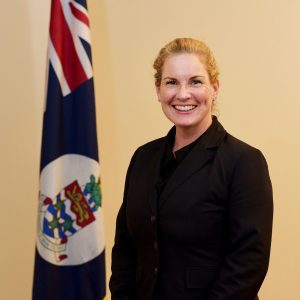
Reforms included the publication of a new national strategy to fight financial crime, establishing a new bureau within the police service to lead complex cross-border money laundering inquiries and a suite of new rules and oversight for high risk industries, including real estate and precious metal dealers.
Significant government resources and funds were directed towards swiftly closing the gaps identified in the FATF inspection.
What are the consequences of being on the list?
Grey listing was a reputational blow for the Cayman Islands, essentially marking it out as having inadequate controls on money laundering and terror financing. It somewhat tarnished the image of the islands as a good place to do business.
In practical terms, some countries (mainly in the European Union) now give Cayman a different risk profile because of the grey listing, following which they automatically require additional due diligence for any transactions that involve the Cayman Islands.
It also prohibits one type of transaction relating to securitised loans being undertaken through the Cayman Islands.
That may have had a very modest cooling effect on the economy.
However, in other jurisdictions, the effect seems to have been more pronounced. An International Monetary Fund study indicated that countries on the grey list suffer an average net loss of 7% capital flow into their jurisdiction as a result of grey listing.
Lees, now a private sector lawyer with Claritas Legal, says Cayman has largely avoided this impact by sending a clear message – through its proactive response to the recommendations – that it is on the route to full compliance.
What would happen if Cayman decided not to comply?
Non-compliance was not really an option for Cayman. The threat of being blacklisted, and placed in the same bracket as North Korea and Iran, would have made the islands an extremely difficult place to do business.
FATF would have called on all its members to apply enhanced due diligence to the point where operating through Cayman would be onerous and cost-prohibitive.
Most banks would likely stop dealing with black-listed countries because the regulation would be too costly and the reputational risk too high.
What happened last month?
Last month, Financial Action Task Force officials met in Paris to examine the progress of grey-listed countries and agreed that Cayman had now met all 63 of its recommendations.

The final hurdle was demonstrating money laundering convictions and sentencing that fit the risk-profile of an offshore financial centre.
The eight-year sentence handed down to Canover Watson earlier this year and the progress on multiple other investigations appears to have satisfied the task force that Cayman is moving to address this.
However, an on-island inspection, scheduled for later this year, is required to confirm and verify that all the action points have been met.
So will Cayman actually come off the list?
Officials, including Financial Services Minister André Ebanks and Premier Wayne Panton, have expressed confidence that Cayman will come off the list this year.
If Cayman passes the on-island inspection, then it is likely to be formally delisted in October.
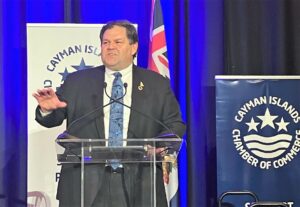
There is some scepticism from industry insiders, though, that this will actually happen, with many feeling that Cayman is being targeted for its past reputation or for more sinister political motives.
Speaking at the Cayman Economic Outlook conference earlier this year, economist Marla Dukharan expressed doubt about the motives of the major European countries responsible for various grey and black lists.
“I hope that compliance will lead to delisting, but I struggle in the data to find a causal link between compliance and delisting.”
What does the on-site inspection involve?
According to a press release from the Ministry of Financial Services, the delisting process involves an ‘onsite visit’ from task force inspectors. That has been tentatively scheduled for late August or early September.
“During the onsite visit, FATF assessors will visit the Cayman Islands to meet in person with local stakeholders to assess the operation of our action plan in practice, and its sustainability,” the release indicated.
“An onsite visit report then will be presented at the next FATF Plenary, now scheduled for October this year, at which the Cayman Islands will receive confirmation as to whether it will be delisted.”
Is that the end of the saga?
Even if Cayman is removed from the grey-list, it faces another assessment in 2025, where it theoretically could face new recommendations.
Lees believes the FATF is acting in good faith and has recognised the work done by Cayman so far. If Cayman continues to keep abreast of the global standards in anti-money laundering compliance and demonstrates it is doing its part to stop the flow of dirty cash around the world, she believes it will come off and stay off the grey list.
For some observers, though, there is always the spectre of new mandates from the European Union or the Organisation for Economic Co-operation and Development.

Tim Ridley, a former senior partner at Maples and former chairman of the Cayman Islands Monetary Authority, cautions that even if Cayman gets off this list, another set of rules and regulations could soon be coming round the corner.
“There always seems to be another list,” he said.
Is Cayman really a high-risk country for money laundering?
If you wanted to launder the proceeds of crime, Cayman is one of the worst places in the world to do it, says Burke Files, an international investigator and author.
“Try opening a bank account in Cayman and putting $20,000 in it,” he said. “It is not gonna happen. All that kind of stuff disappeared in the ‘80s.”
He argues that Cayman is primarily a middle-man in a complex web of financial transactions, with relatively little real money handled on the islands.
“Cayman is primarily a service bureau,” he said.
That theory is, at least partially, borne out by the work of Cayman’s new financial bureau of investigations. While the new unit has found plenty to investigate – in many cases, the substantive offending is off-island, says Victoria Templeman, who runs the bureau.
That doesn’t mean that Cayman can’t play its part in detecting and prosecuting financial crime, she says. The bureau can and does go after assets stationed in Cayman and works with law enforcement in other jurisdictions. It can also prosecute registered companies or financial services providers who enable money laundering.
Lees adds, “As money laundering gets more sophisticated and harder to detect, we have to stay on top of that. We can’t just say the money is just passing through so it is not our problem, we have to play our part.”
Why does Cayman always seem to feature on these lists?
FATF makes the point that Cayman is a major financial centre with billions of dollars flowing through its accounts annually, and that the amount of money laundering investigations and prosecutions did not reflect that.
The counter-argument, a theory endorsed by multiple people in the financial services industry that spoke with the Compass, is that this is really about competition.
“These sound like anti-money laundering laws, but it’s a revenue recognition. It’s a smokescreen for anti-competitive legislation to get you out of business,” says Files.

He argues that the underlying motivation is connected to a belief that Cayman and other offshore centres are depriving European nations of their rightful tax revenue.
“They want you closed, and they will continue to add layers and layers of compliance until your services are no longer cost competitive,” he said.
Dukharan made a similar argument at the Cayman Economic Outlook conference, suggesting the plethora of lists was about business competition rather than fighting crime, and that Cayman, and other Caribbean nations, are treated unfairly in comparison to larger counties.
If Cayman is so clean, why does it have this enduring reputation?
From ‘The Firm’ to ‘Jeopardy’ and just about every crime novel in between, the idea of crooks hiding their money in the ‘Caymans’ has become a cultural trope as enduring as the association between Sicily and the mafia.
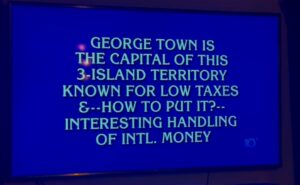
There’s plenty of source material in Cayman’s past to explain that. But economist Julian Morris argues this was largely shut down in the ‘80s, and criminals have moved on to other jurisdictions.
“The reality is that money laundering is unlikely to be taking place here, where it is under intense scrutiny,” he said.
“It is more likely to be happening in the property market in Dubai or on the gambling tables in Macao than in Cayman’s financial services industry.”
Drug-dealer Leigh Ritch, in his memoir ‘In Too Deep’, writes that he moved his operation out of Cayman in the late ‘70s as it became impossible to move money through Cayman’s banks around that time.
The reputation has persisted for far longer in the public imagination.
Cayman Finance chief Steve McIntosh, speaking at the Cayman Economic Outlook conference earlier this year, said the island is fighting back.
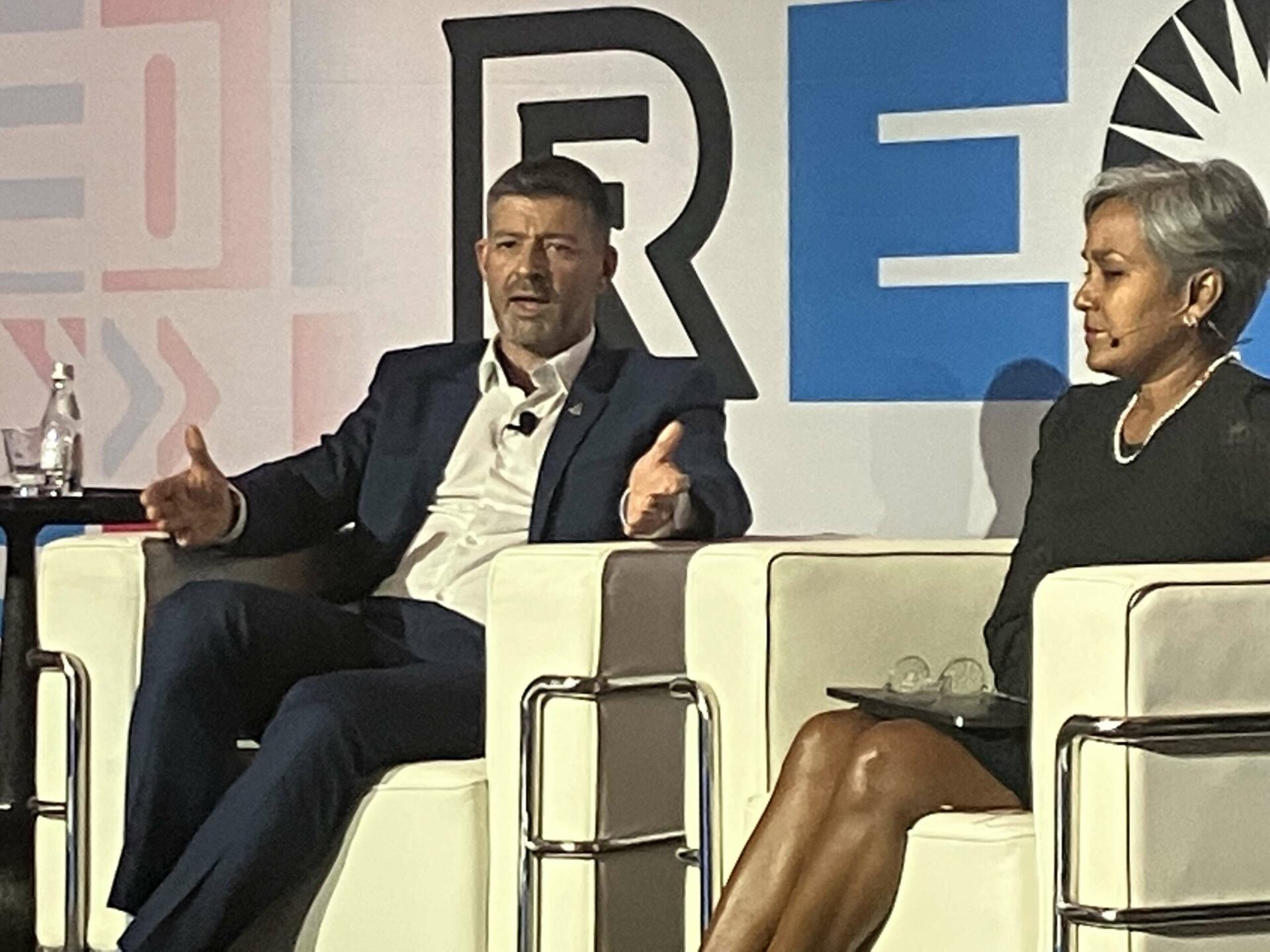
He acknowledged it was a tough ask to alter the perception of Hollywood scriptwriters, but said Cayman can and is doing more to defend its reputation against ‘slice and slander’ journalism in the international press.
“A lot of it comes from a place of ignorance rather than malice, so there is a lot we can do to push back on that,” he said.
What is the cost to Cayman of co-operating?
Fair or otherwise, Ridley believes that Cayman is doing the right thing by co-operating. Though he remains sceptical over whether Cayman will ever escape the intense scrutiny of international politicians and their network of regulatory enforcers, he says the islands have little option but to make an earnest effort to comply.
There is an enormous cost, globally, to the new layers of compliance required to combat money laundering, says Morris, that aren’t matched in the amount of crime detected or proceeds seized.
While Templeman acknowledges a sense of frustration that Cayman may be being held to a higher standard than other jurisdictions, she believes an enhanced regulatory environment ultimately helps Cayman.
“We don’t want money laundering here. The ultimate goal is to have those high standards and to protect the economy,” she said.
Why should it matter to me?
Fees from the financial services sector bring in hundreds of millions of dollars to government coffers every year.
Without that revenue, Cayman wouldn’t be able to fund its civil service.
Maintaining good standing in the international community protects the islands’ core business, says Lees.
“If you are an international financial centre, as the Cayman Islands is, you have to demonstrate that you have stringent rules, and if the rules are breached you will deal with it.”
Templeman says the work being done protects Cayman’s economy.
“It’s a national security issue,” she adds.
Related Videos













It’s easy for us to get off the grey list.
Just introduce a 25% Corporation tax and 40% personal Income tax.
That is all this is about: destruction of a country that doesn’t raise revenue the same way they do. A competitor.
If they really cared about money laundering the EU would grey list Delaware, Nevada, Wyoming.
Even in Florida one can open a bank with minimal documentation and corporations can be incorporated online with no checking whatsoever.