

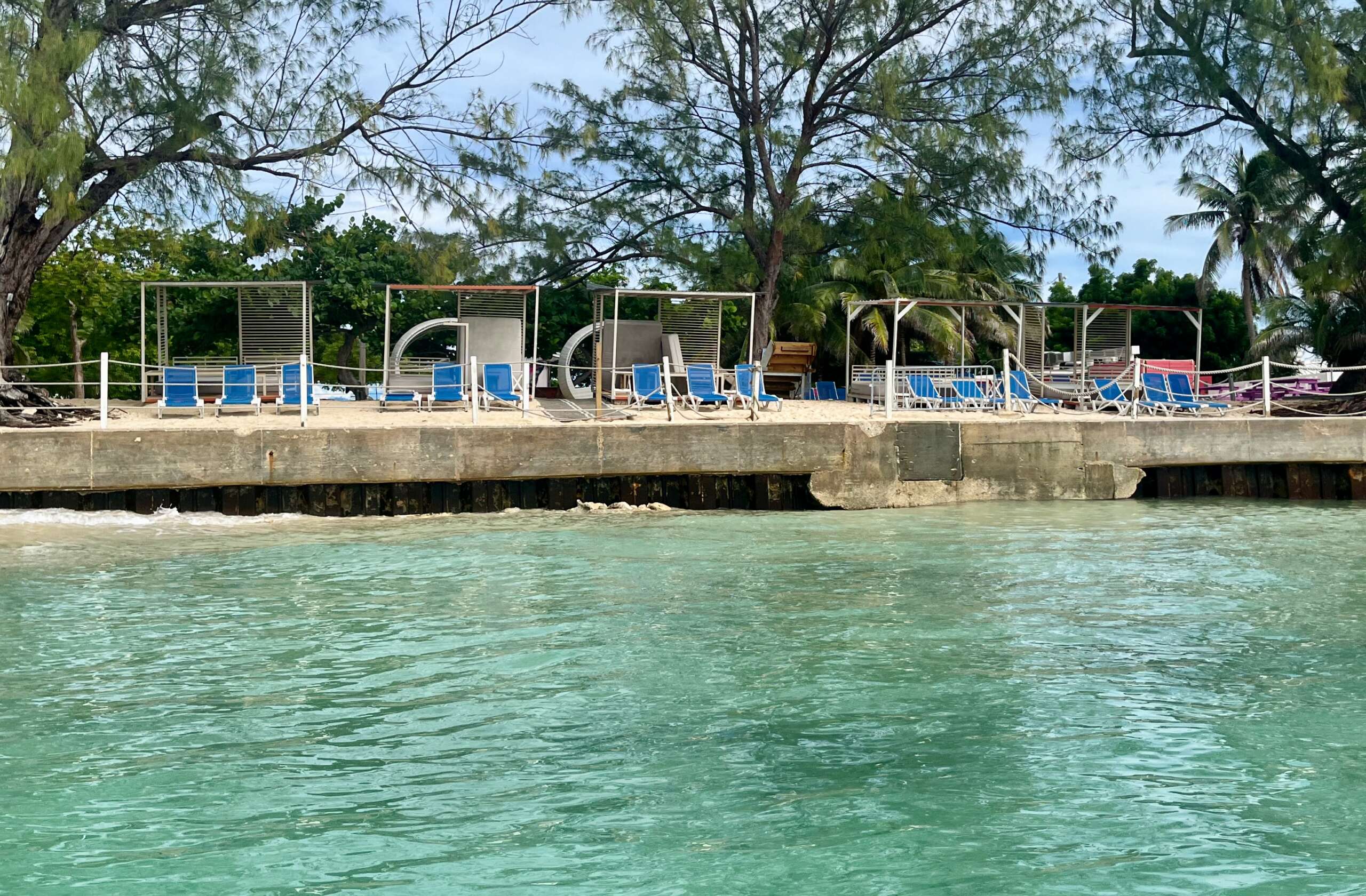
Government is seeking an expert technical consultant to help formulate a plan to bring sand back to the eroded southern end of Seven Mile Beach.
A request for quotations went out last week, seeking qualified bidders to help design the best solution to restore sand stripped away by recent storms – the culmination of years of gradual losses along the beachfront.
Current efforts are focused on the ‘southern cell’ of the Seven Mile ecosystem – a kilometre long stretch of formerly sandy beach running from the Sovereign condos to just south of the old Treasure Island site.
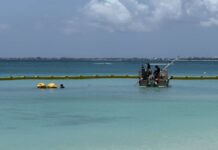
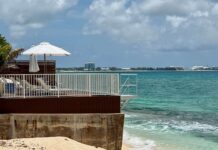
Large sections of the beach are now under water, with waves lapping against sea walls, and in some cases buildings, along the waterfront.
Government is seeking “coastal engineering services” to scope out the project, according to bid documents posted on its website late last week.
The proposal, issued by the Department of Environment and Ministry of Sustainability, states, “The Cayman Islands Government is currently considering a beach nourishment project with the intention to restore and stabilize approximately 4,500 linear feet of the southern end of Seven Mile Beach which has experienced chronic erosion over the past decade.”
The winning bidder will advise on and design an “engineered solution” and assist with procurement on a “long-term plan for the beach’s sustainability and resilience for future generations”.
The bid documents indicate government is seeking recognised industry experts, preferably with regional experience, who are needed to provide a “cost-effective and environmentally sustainable” solution.
The bid process appears to be the logical next step, stemming out of a pair of government task forces which looked into the challenges along the beach in 2021. That work mysteriously paused in March 2022 after months of effort – and $21 million allocated for a solution remained unspent.
Recent storms and the worsening of erosion along the impacted stretch has put the issue back on the agenda.
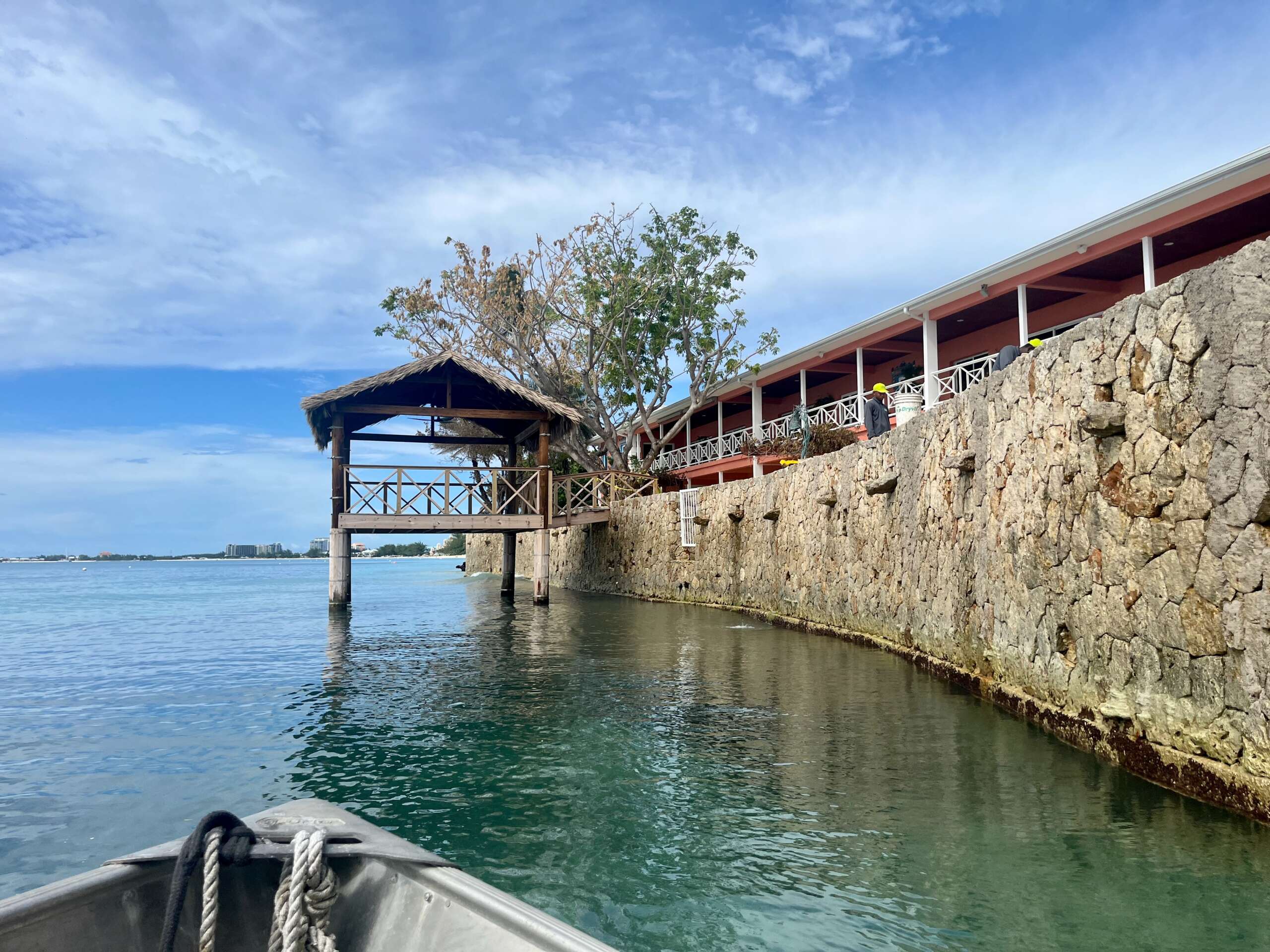
The government proposal is one of a number of potential solutions under discussion.
The Compass understands that the Marriott has submitted a coastal works application for its own project aimed at restoring and protecting the beach within its property parcel.
Discussions are also continuing between government ministers and private sector interests, including the Dart group, the Marriott ownership and Turkish landowner Ergun Berksoy, over a longer-term strategy of nourishing and replenishing the beach to combat the impact of storm and wave action.
Coastal setback change needed
The Department of Environment would also like to see tighter regulation of coastal setbacks and some form of managed retreat for buildings and other hard structures that have been built in the active beach zone and are believed to be impacting the ecosystem.
Speaking to the Compass on Friday, DOE director Gina Ebanks-Petrie said expert technical advisers were required to investigate and decide on the best strategy for replenishing the beach.
She said the department believes that, in the short term, the best way to restore the beach and provide protection to storm-impacted properties is through sand replenishment. But she said this had to be done carefully and overseen by experts with specific technical skills to ensure any solution doesn’t create new problems.
Once the technical work is done and a solution is ready for implementation, it would then be up to government to allocate funds to carry it out.
Ebanks-Petrie believes any replenishment project should happen in tandem with policy changes around coastal setbacks.
“If the government is investing in putting sand on the beach, then we need to be able to do what is necessary from a legal and regulatory standpoint to protect that investment as best we can.”
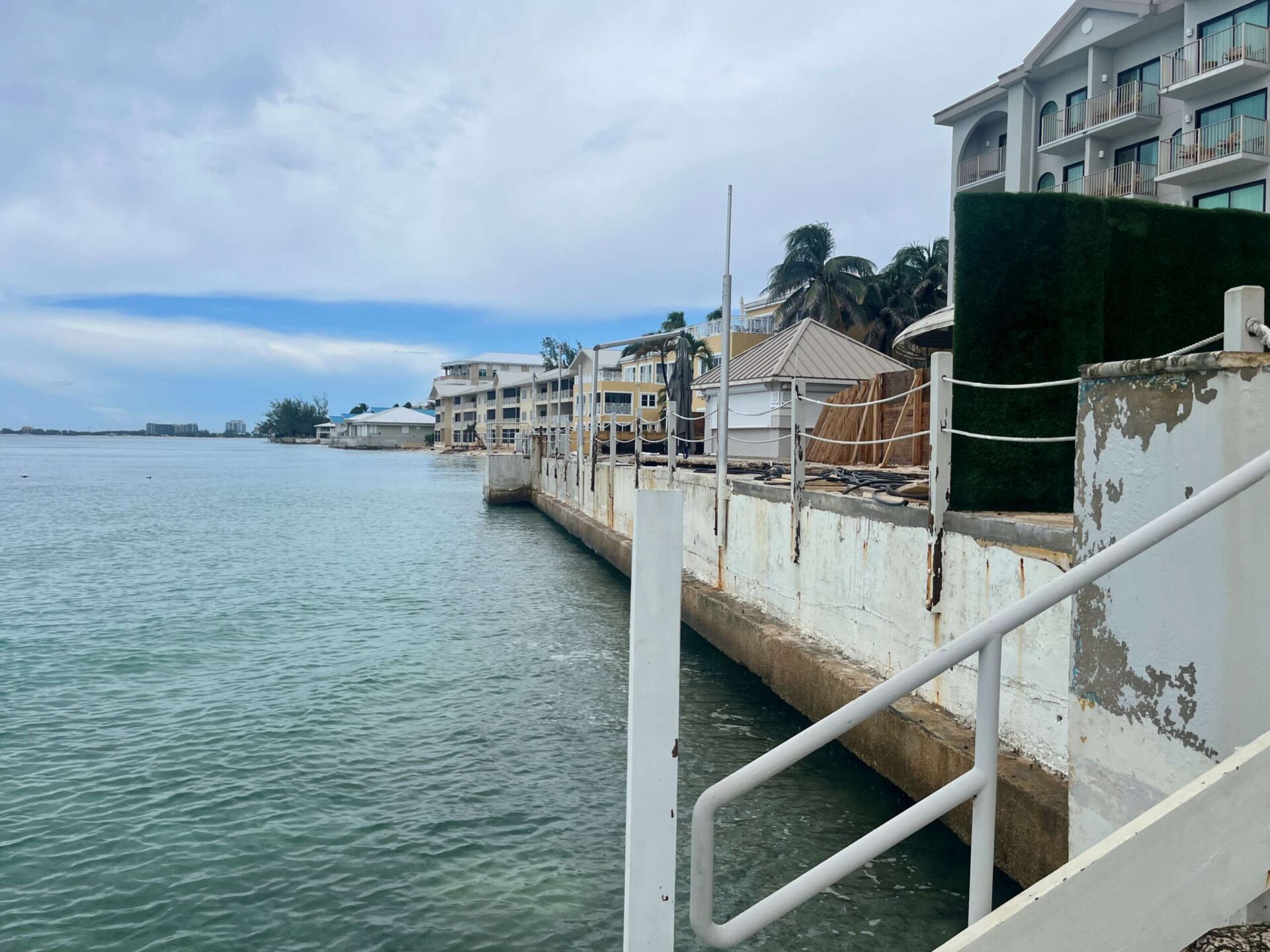
The Compass reported last year that the line in the sand that determines property boundaries along the beach is so misleadingly measured that it is, in some cases, under several feet of water.
A government task force report recommended a new fixed reference line – based on decades of data – from which coastal setbacks should be measured.
Current planning regulations require a single survey to establish the mean high water mark as the reference point for coastal building line ‘setbacks’ for any given property. That survey has to be conducted within six months of an application to build.
But the report highlights “the highly dynamic nature of coastline” along Seven Mile Beach, suggesting that it can fluctuate significantly in the course of a single day – even more so over six months.
Property owners take advantage of that flux by pressuring surveyors to conduct repeat surveys at optimal times in order “to maximise the extent of the Mean High Water Mark and thus allow development further seaward”, the report noted.
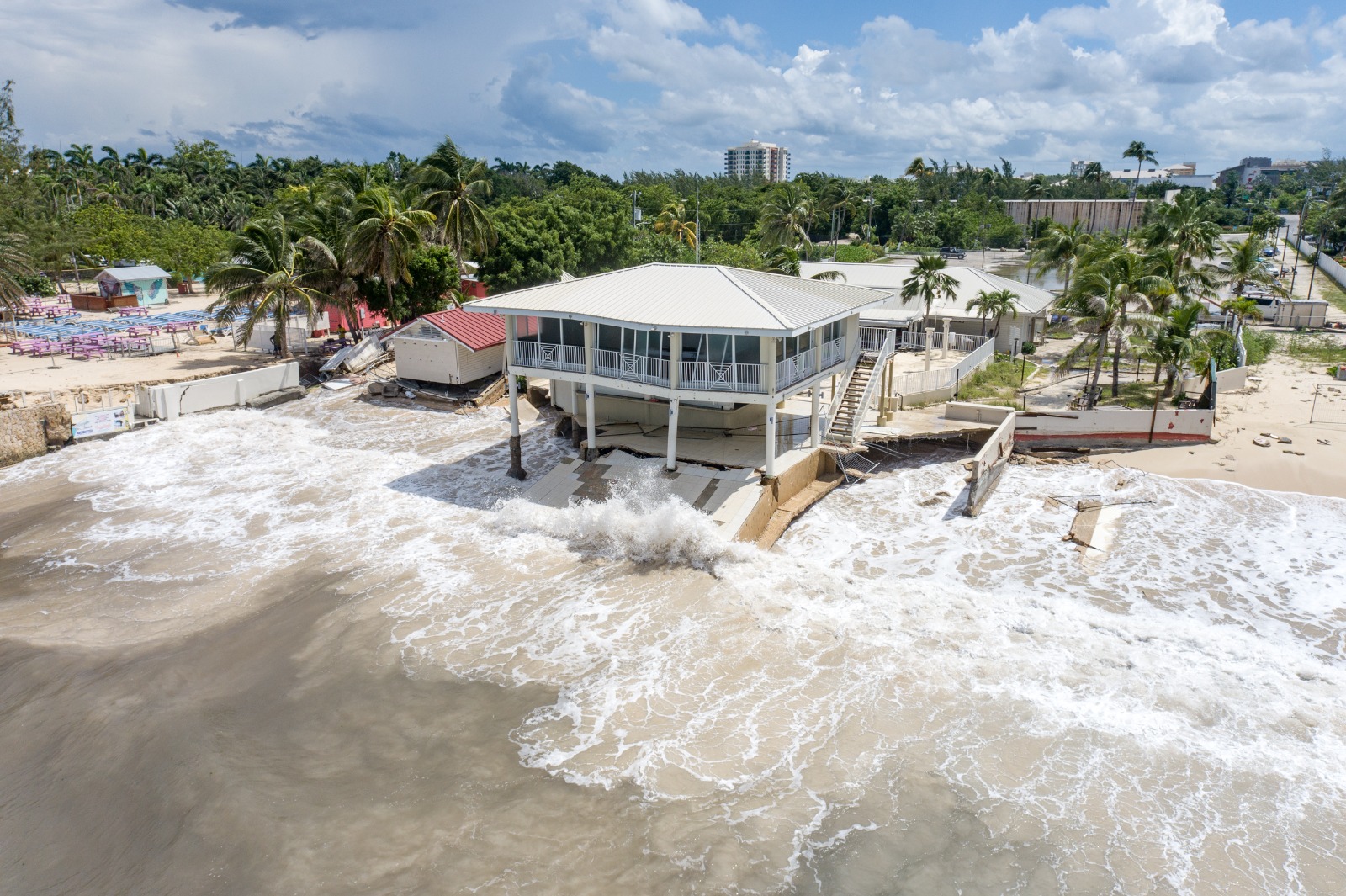
Ebanks-Petrie said the proposal for a standardised line would help ensure any future development was appropriately set back from the water. She believes this needs to happen in tandem with the beach nourishment – in part to avoid a scenario where property owners seek to build on the replenished beach.
The committee report suggests widespread support for the idea across multiple government departments, but the concept would require a change to planning laws, which would have to go through parliament.
Equally, the department continues to advocate for a more considered approach to coastal development.
“The DOE has consistently advised against variations to setbacks. We are fighting long-term problems with sea level rise and storm impact and there are limits to how much pressure we can put on our natural systems and expect them to survive,” Ebanks-Petrie said.
A separate, but related, aim is for a managed retreat policy to be considered. That could mean properties that are significantly damaged in storms or through coastal incursion may not be automatically granted the right to rebuild in the same footprint.
Related Videos










Why has it taken Govt so long to arrive at this decision on an issue vital to the nation’s prosperity!.
One thing occurs to me- all this disappearing sand must have been dumped offshore. If it has not gone over the drop off could it not be dredged and returned?. Govt could even invest in a dredger and use it on a regular basis for beach replenishment purposes.
Dart already commissioned a detailed study, which came to the obvious conclusion that nourishment is necessary (period). I’m surprised that you don’t even mention those conclusions in this article. The solution is simple and obvious. Change the rules for development moving forward and nourish and replenish the beach periodically in the meantime.Wasting more time on studies is just that – a waste.
Stop wasting public funds. Managed retreat as recommended by DOE is the only solution to this issue.
Fully agree, managed retreat is the only way, then replenishment. We have the experts at the DOE that Planning has ignored for decades.
Exactly! I agree with you.
The fact government is doing anything is great news.
My prayer is that this doesn’t turn into a soft-cost worm hole where hundreds of thousands or millions go into consultants to tell us how to dump sand on our beach, without any sand actually getting dumped.
We already have a fulsomely sized civil service who should be able to google the contractors servicing Miami’s beaches. We need to pick up the phone and call people while we start with a test barge of sand that we could procure from somewhere. Look to those already doing it in Miami and copy their best practices or hire them to do the first routine and then place the beach nourishment task under public works somewhere later.
My fear is posting an RFP on Bonfire will not attract the best and the brightest to help us with our problem, and those most capable are too busy to navigate our cumbersome RFP process. We have an administrative organization inside our government and should tap some of our own people to call a few contractors stateside. There is a YouTube video that clearly shows how sand gets dumped in Miami. It’s not rocket science, to watch the video and have our own public works copy what works.. It’s more important that we physically move the sand than talk or write about it.
We don’t want beach renourishment to become another Re-Gen project where the consultants chase paper and waste time/money while nothing actually gets done.
Beach replenishment is a fool’s errand in the era of rising sea levels and the abundance of sea walls along the south end of seven mile beach. We will sadly be watching our (multi) million dollar investment in “new” sand get washed out to sea within weeks of it being deposited.
They should consult with the southern New Jersey shore towns, they battle with erosion every year and have a plan in place and could possibly help or offer insight to what the best restoration plan would be
Again I am not an engineer but only a retired dentist, A wall the hight of the water from the edge of the cove at Sunset Cove made out of the same stones that the cove is made of to the edge of the Sovereign and filled with sand will not only fix the problem but insure that the sand will never be washed away again. I just did that for free not the million dollars the government is going to pay for some idea that will need to be done again in 5-10 years
Here are some thoughts:
1. “mean high water mark as the reference point for coastal building line ‘setbacks’ for any given property”…if there are buildings and other construction in the path of oncoming water that has already submerged beachfront, there is no longer any viable way to measure actual “high water mark” as the incoming water is blocked from reaching what would be its highest land termination point.
2. “the [DOE] department believes that, in the short term, the best way to restore the beach and provide protection to storm-impacted properties is through sand replenishment”…if the decision has already been made that the “best way” is to dump dredged sand, this is likely to be a very frustrating expenditure of government funds, as this decision is the first that needs to be addressed, not already presumed and then merely investigate how to carry it out. Frankly, virtually everywhere that it has been tried, the result has been abject failure after enormous expenditure of funds. “Short term” in some places has meant minutes or hours or even at most days.
3. As there is reference to Miami [Beach] being replenished continuously, it might be pointed out that even with this round-the-clock effort and expense, much of the dredged sand deposited is merely being returned to the ocean virtually immediately, thus requiring an endless and fruitless attempt to overcome Mother Nature. Appears to be quite a losing proposition, even in Miami Beach.
4. Regarding “set backs”, one decision that might be addressed is whether it is truly financially prudent to build permanent structures closer or farther from the waterline [if that can even be determined] if when you chose to get closer your beach diminishes until it is gone, thus compromising your original investment. It may seem less financially rewarding to be required to build farther back, but if by building farther back you keep some beachfront, your investment at least may retain some value. What exactly is left of value of the structure of the Royal Palms at this point given that the beachfront is completely gone and now it can only be subject to demolition and reconstruction much farther back?
There have been detailed engineering studies done on this months and years ago resulting in viable solutions. It will involve either sand replenishment or the use of jetties (groins in local parlance.) Blaming landowners for developing valuable properties that draw in tourism dollars is silly. Beaches always change over time, and the protective walls some properties have are not the reason for sand loss according the the verifiable data. This has been a problem going back to at least the early 2000s when the Marriott put in the reef balls. The public and private sectors need to work together to get this resolved and move on. The economy is more than strong enough to support protecting Seven Mile Beach for both private owners and the public. This is not an uncommon problem for beach communities and has been solved over and over with proven solutions. I live near Galveston Island which is a sandy barrier island with an enormous sea wall. The beaches get damaged and lose sand from time to time, and sand is brought in to replenish them. They also have jetties along the beach that stop sand from traveling away from the populated areas. The technology to fix these issues is proven and well documented, and action needs to be taken. I’ve stayed in the exact location this is happening at the Marriott and Regal Beach numerous times and it’s inconceivable that nothing has been done about this yet.
Beach replenishment probably will not work. The sand will just wash away with the next good storm that comes along the shore. Additionally from the photos I am seeing you have so much hard bulkheads along the shore that the beach is guaranteed to disappear. You also need to take into account that the sea levels are rising and that a plan for strategic retreat needs to be made and then all other activities are considered and funded within this context. In the end there is a limit to how much construction you can build on a natural site before that site is no longer natural except for that part of it that turns into a natural disaster. How are the mangrove forests? How are the corals? Are they healthy? These are the systems, the natural ones, that can provide resilience to storms and sea level rise. Anything else you guys are just building castles in the sand.