


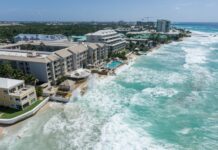
Chances of a beach-replenishment project on the severely eroded Seven Mile Beach stretch appear to hinge on private landowners driving the plan.
Government has not budgeted anything for the project over the next two years, and Sustainability Minister Katherine Ebanks-Wilks suggested last week that the National Coalition for Caymanians administration is hoping landowners on the impacted section of the beach will pay for the beach restoration.
She said a private-sector ‘foundation company’ involving landowners on the Seven Mile Beach waterfront was being established to lead the project and fund it. It is not clear who is involved or what funds have been committed at this stage. Ebanks-Wilks said government’s primary role initially would be in oversight and approvals for an expected coastal works application, while a steering group will be formed to liaise with private sector interests as the project progresses.
Several prominent landowners on southern Seven Mile said they were unaware of the plans, which the Compass understands is being driven by an unnamed private individual who does not own property in the area but is seeking to pull private-sector interests together to form a workable plan.
Ergun Berksoy, who owns a large waterfront property on the impacted southern stretch, had previously announced that he would contribute $3 million towards beach replenishment on Seven Mile. But he told the Compass that no one had approached him about the latest idea and that he would not be willing to stump up cash if government was not planning to contribute itself.
An earlier independent coalition government, known as PACT, had budgeted $21 million to help deal with erosion on Seven Mile Beach. At that time, then-Premier Wayne Panton, who is a back bencher in the new coalition, called the issue an “urgent national priority”.
Since then, there has been much discussion but little forward movement on an issue that economic studies indicate is fundamental to the Cayman Islands’ economy and reputation as a tourism destination.
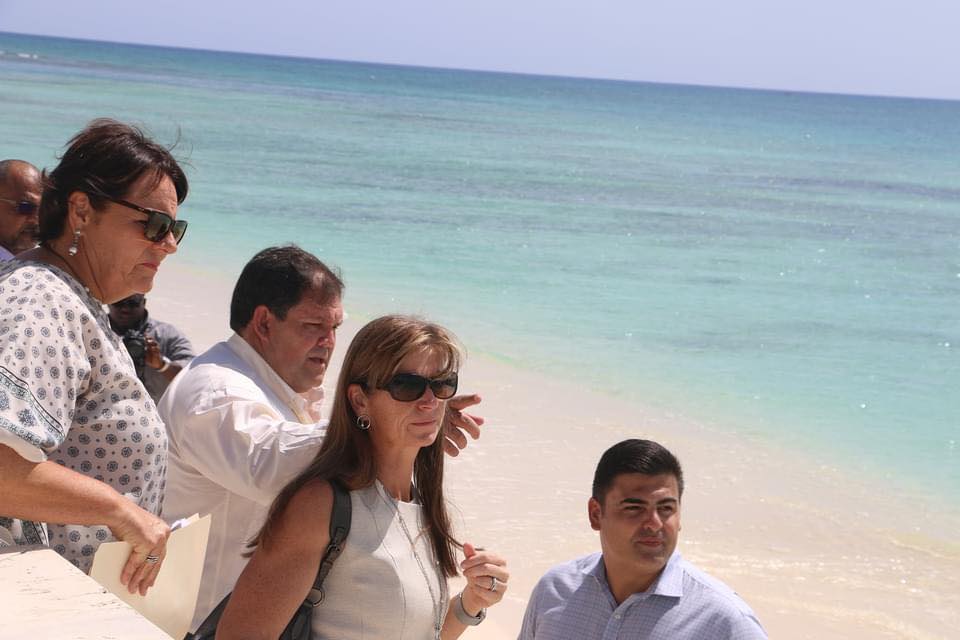
Berksoy said his offer of funds was contingent on government and other interests coming to the table. He said the island needed a sustainable long-term solution for erosion across Seven Mile Beach, and he would be willing to provide financial support, but only for a co-ordinated plan which involved government financial backing.
“I am a man of my word, but for me to put the $3 million, government must put the $21 million which was promised many years ago and never spent one dollar.
“Now, they changed the subject; that the money will be only given by the wealthy owners. Nobody said this to them. If government puts in its $21 million, I will be willing to pay the $3 million immediately.”
He said he also wanted to see what other landowners would contribute.
Berksoy said it was not only the southern end of Seven Mile Beach that was impacted by erosion, and it would make sense for a professional coastal engineer to be hired to come up with a plan for the entire area.
“Just to bring the sand and put it there, won’t work,” he said.
Late last year, the Department of Environment issued a request for proposals to find a consultant to design the methodology and process for the wider project. However, the bids came in over budget and the project was put on hold and now appears to have been discontinued, with no funds allocated this year.
There was no reference to that in the brief Finance Committee debate on the topic last week.
Government oversight role
>Ebanks-Wilks indicated that an engineer had been hired by the private-sector foundation company to come up with a plan, and government’s principal involvement would be in dealing with permits for a coastal works application.
Asked for more information, her ministry released a statement to the Compass Wednesday, 26 Nov., saying Cabinet has been “made aware of a proposal by a group of private landowners to replenish and maintain the sand at the southern end of Seven Mile Beach, which will be taken forward by way of a Coastal Works Permit application”.
A government steering committee is proposed to ensure that discussions continue on a variety of factors, including government’s possible role in establishing a funding mechanism for “maintaining the beach post-nourishment”.
“While private landowners will lead on the development of the technical solution, multiple government ministries and departments will be involved at every stage, with the general public and neighbouring land owners notified and consulted appropriately,” the statement indicates, noting that the coastal works permit process requires input from key environment and lands officials.
“This new proposal potentially benefits the Cayman Islands Government and the public by reducing the financial burden on the public purse, sharing risk responsibility between the government and the private land owners, and delivering a more timely procurement process,” it stated.
The Dart group, one of the major property owners on the impacted stretch of Seven Mile, has previously commissioned a coastal engineering study on erosion, which concluded that a massive replenishment project and ongoing maintenance is needed to address the issue.
Asked for comment this week, Ben Meade, Dart’s senior communications manager, said, “As a major investor in the Cayman Islands, Dart is pleased that government is taking the issue of erosion along Seven Mile Beach seriously, and that a group of private landowners are stepping up to replace the sand that has been lost over previous decades.”
The Grand Cayman Marriott Resort recently secured approval for its own self-funded beach replenishment project in front of its property. The approval was contingent on the capacity for the project to be integrated into a much larger restoration, which environment officials said was needed to address worsening erosion.
“This has the potential to lead to the irreversible loss of one of the Cayman Islands’ most valuable natural assets,” a coastal works review report on the Marriott project indicated.
Possible funding mechanisms
The Compass understands that a private individual is leading efforts to pull owners together to help design a solution for the beach and has set up a foundation company as part of that effort.
But it is not clear at this point who else is involved or if any serious funds have been committed from landowners.
It is understood that the company is initially focusing on scoping and costing the project, and has sounded out an engineer to do that work. It could come back to government to seek funds once the parameters of the job are known. Efforts to reach the company this week were unsuccessful.
Ebanks-Wilks appeared to acknowledge that some form of government funding could ultimately be required for longer-term maintenance.
Facing questions from Opposition leader Joey Hew in Finance Committee last week, she said discussions were ongoing with the private company on funding mechanisms for future upkeep and maintenance.
She accepted that Seven Mile Beach was not the only area around Cayman where beach replenishment may be required and said government has had “discussions among ourselves” on potential funding methods, but has not made a policy decision.
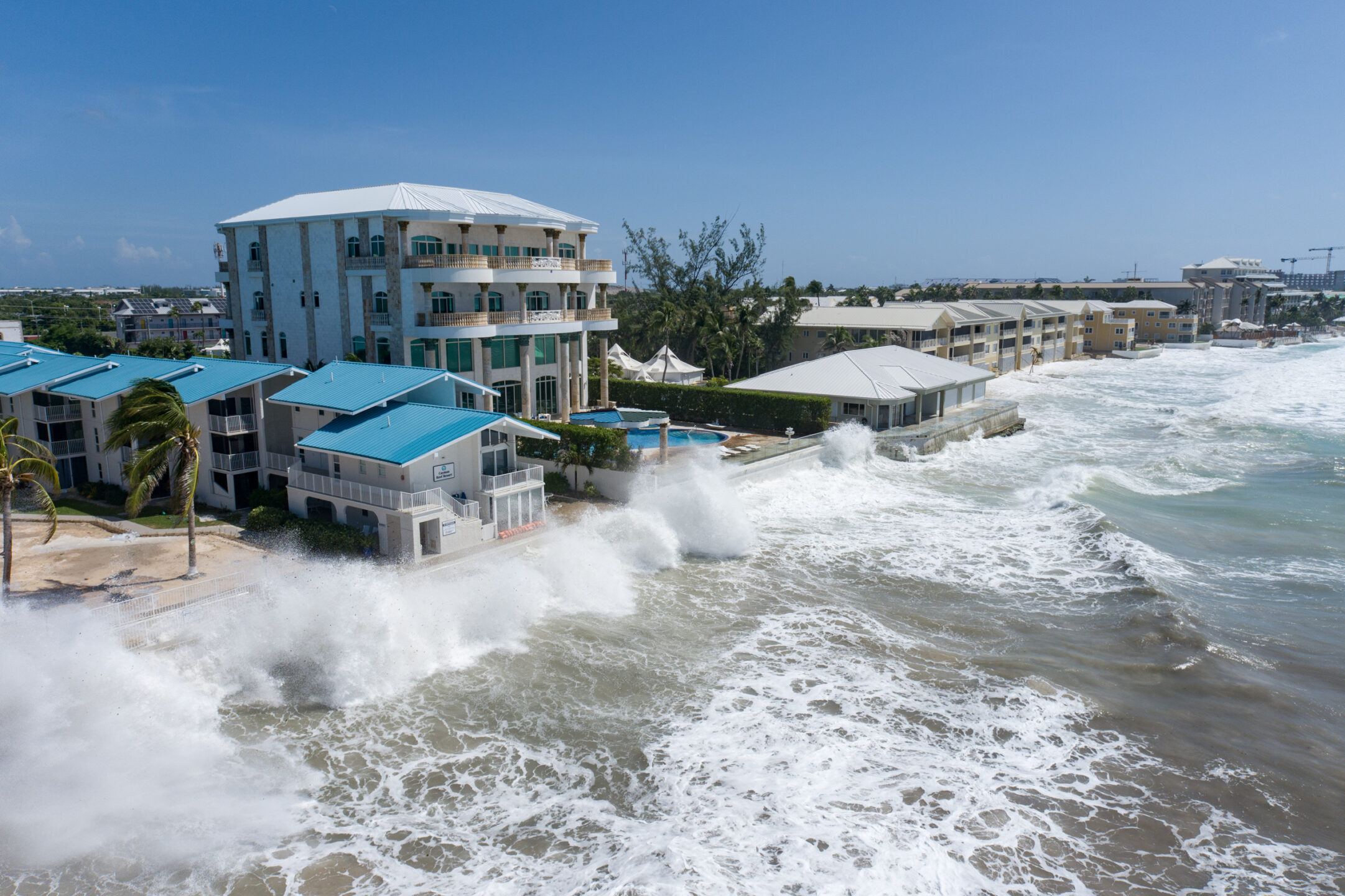
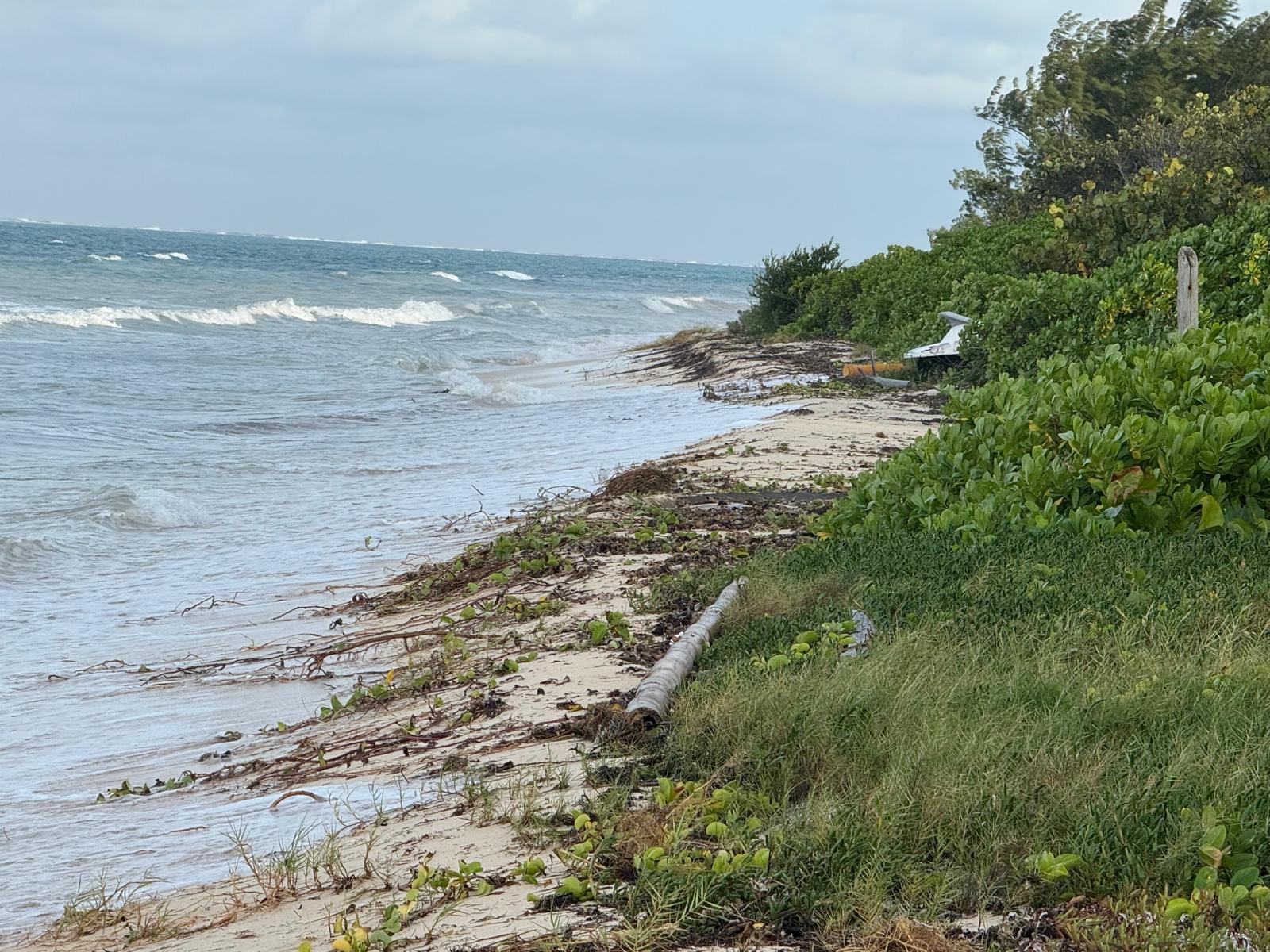
Hew said he was disappointed to see no government funds committed to the problem, which has seen sand stripped from the southern end of Seven Mile and properties now dangerously close to the water.
He said erosion impacted the entire country and beach replenishment needed to be an ongoing national project with a specific funding stream. Previous suggestions have included discussion of an increase to the Tourism Attraction Tax to help pay for beach replenishment.
“There’s zero in the budget for it, and the minister’s response was that private sector is going to do it themselves,” said Hew, who urged government to come up with a properly funded plan to address erosion along the length of Seven Mile Beach and in other areas, including Kaibo in North Side, Barkers in West Bay, and on the Sister Islands.
He said he believed private landowners would be willing to contribute, but he advocates for a sustainable ring-fenced funding source – for example, through an additional levy on cruise and air arrivals.
Billion-dollar impact
Dart, in its statement, referenced two reports it commissioned last year. The first research report by DHI indicated a fundamental shift in the balance of sand movement along the beach, leading to a net sand loss that would likely continue. The second – a cost-benefit analysis by economist Marla Dukharan – put the economic value of Seven Mile Beach at close to $1 billion and highlighted how erosion was impacting the country’s economy and limiting direct revenue streams to government.
She indicated that government was already losing money from stamp duty and tourism taxes in the area as a result of reduced visitation and reduced rates for hotels and condos. And she suggested the knock-on effect of lost custom was having a negative impact on restaurants, bars, construction firms, realtors, home owners and other businesses, which she expects to worsen over time.
“The risks and implications of Seven Mile Beach erosion are severe,” she wrote.
“Protecting the shorelines of the Cayman Islands could be one of the most important capital investment priorities to ensure the long-term wellbeing and continued prosperity of the people of the Cayman Islands.”
Meade added that Dart is ready and willing to work with government and any private-sector partners on a solution for the beach.
“As we have stated previously, a sustainable future for Seven Mile Beach requires coordinated efforts on multiple fronts, which include both short- and long-term solutions. We look forward to collaborating with government and this group of private landowners to allow Seven Mile Beach to continue to thrive as a world-class destination and cultural and economic cornerstone for the Cayman Islands.”
Related Videos










Government too busy taxing private businesses, running away business on the island, spending money on drivers for millionaire politicians, creating divide between us and expats, and soon will probably somehow announce taxing expats to fix the beach.
How does ZERO dollars from flights, tourism and hotels not get set aside to fix the beach. This is wild. Seven mile is one of the countries greatest assets but the government cares more about hiring drivers for Kenneth Bryant, Ebanks, John John and Michael M.
Is that their definition of creating jobs? Spending more money on government hiring. Not fixing the beach.
Amen!
The beach is publicly owned and is great benefit to the community, yet government expects private landowners to fix it? This government is truly useless and unreliable.
Keep building high rise buildings, highways, and closing small business shops.
The only thing left for tourists to experience the true Cayman experience is the beach. It’s truly sad that money is more important than preserving what’s left.
Good bye Cayman. Been going there every year for twenty seven years.
We have a Govt which prioritises funding for chauffeur driven cars for all its ministers, and ignores the loss of our biggest tourist attraction,the West Bay beach. Our Govt and our M.P’s have their heads in the sand, perhaps they feel they can retrieve their heads when there’s no sand left.
How do they walk around in public with their head high? It’s shameful. It’s giving, they 100% don’t care about their land. Rome didn’t fall in a day so they should be careful of the sin known as greed that brought Rome down. And definitely hire better people. Who’s the economist in the room here?
As I have suggested many times before a wall the height of the water from the edge of the cove at Sunset Cove to the point at the end of the Dart property and filled with sand will solve the problem without spending millions The wall which will be made of the same stone as the cove will hold the sand in forever
Doing nothing to protect our biggest asset, driving out a lot of expat workers with obscene increases in driving licence fees, what next can we expect from our overpaid politicians?.
This is incredible!! Seems like “reckless endangerment” to me! Does the Government have a plan or is interested in a solution?
The beach may be owned by the public but the perception is access to it is largely controlled by private interest and profit goes to them first and trickles down to the rest of us.
Hence government’s unwillingness to even discuss a publicly-funded solution.
Fact: people will not spent holiday cash to go to an island resort that lacks safe water access any more than they will buy a car that lacks an engine.
Cayman survives very nicely on two primary revenue sources: financial services and tourism.
And if you think the two aren’t linked, try opening a bank on one of those nice safe little islands in the Antarctic and see who trundles their cash to you.
Truth is the traditional Seven Mile Beach is probably lost for ever. But the ocean is still there, just the sand is gone. The solution: adapt the new beach make it swim and paddle safe. And accept that this has to be a combined government and private effort.