


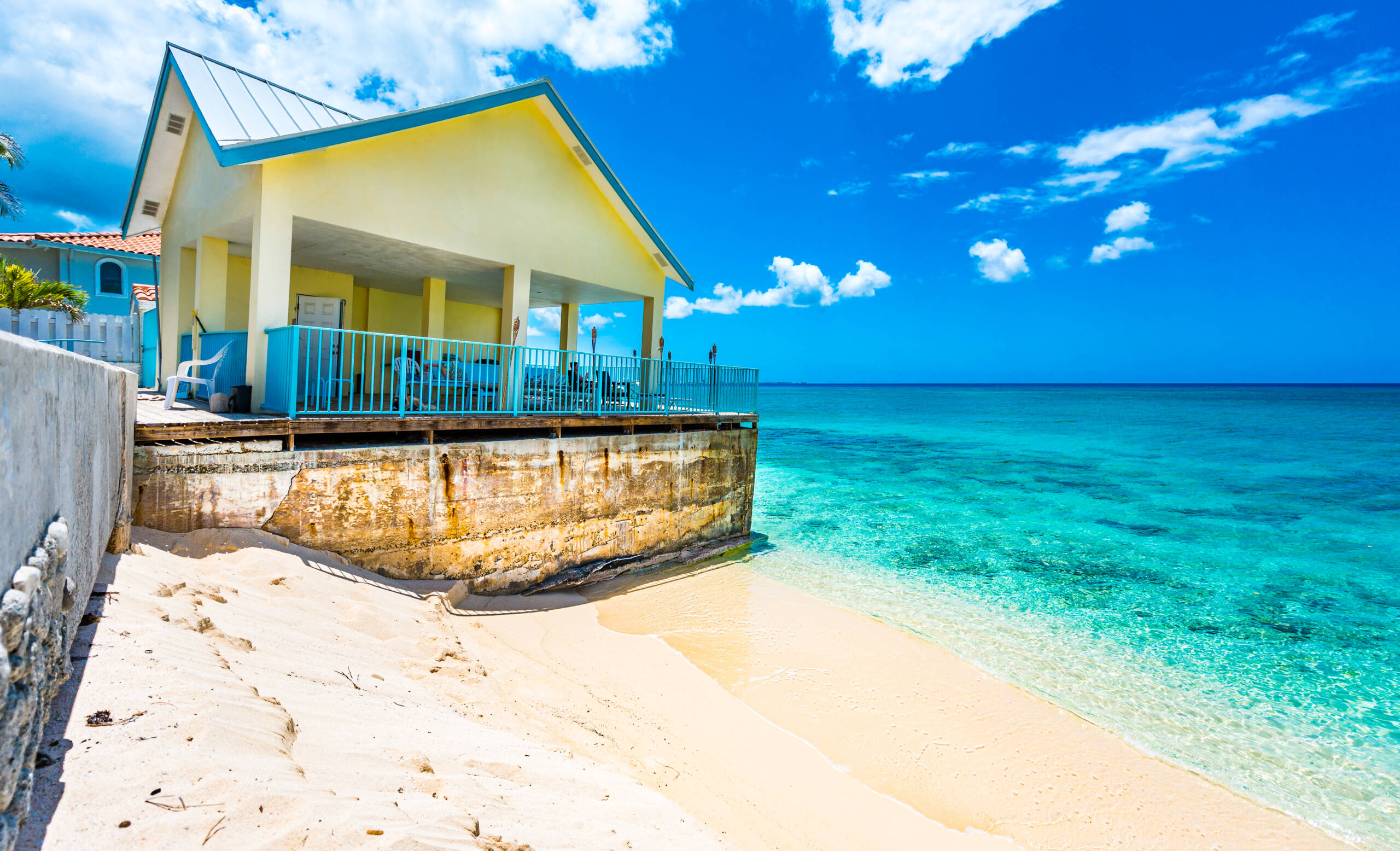
The Cayman Islands must radically change how and where it builds to be ready for the impacts of sea-level rise, a host of experts have warned.
As surging seas threaten to redraw the map within the next three decades, concern is growing that the islands’ development rush is not adequately contemplating what Cayman’s future could look like in a climate-altered world.
According to some projections, up to one-third of the current land mass of Grand Cayman will be below the anticipated high-tide mark for 2050.
That doesn’t necessarily mean residents in Savannah or West Bay will be wading knee deep in flooded streets on a daily basis. But Cayman risks losing chunks of its coastline to erosion and large swathes of the island will be exposed to much greater dangers from flooding and storm surge on a far more regular basis.
If the projections are correct, a minor storm, in future decades, could carry threats currently more commonly associated with a major hurricane.
Fighting the tide
- Cayman 2050? How surging seas could redraw the map
- What does Cayman’s environment contribute to the economy?
- The issue explained: Putting a price on nature
- Expert: ‘Climate threats already impacting Cayman’
- Climate change’s biggest threat may be to Cayman’s economy
- Cayman braces for impact as ‘climate catastrophe’ looms
Daniel Gilford, a climate scientist with Climate Central, which has produced risk maps for the entire planet, based on United Nations predictions of future sea-levels, said there is little that can now be done to change those projections.
He said “sunny day floods” not associated with weather systems could become the norm in some parts of the island.
Mapping out the most-threatened areas, and planning development and flood defences accordingly, is the key to managing that threat, he added.
Cayman’s average elevation – just 7 feet above sea level – makes it one of the lowest lying territories in the world.
The likelihood of avoiding impact is limited and threatened countries should “ensure future developments occur in places and ways that anticipate worse flooding in the years to come,” Gilford advises.
Even that may not be enough. He said erecting coastal defences like dykes and seawalls, elevating buildings, moving critical infrastructure to higher ground and altering zoning to protect people and property should all be on the menu of options for decision makers.
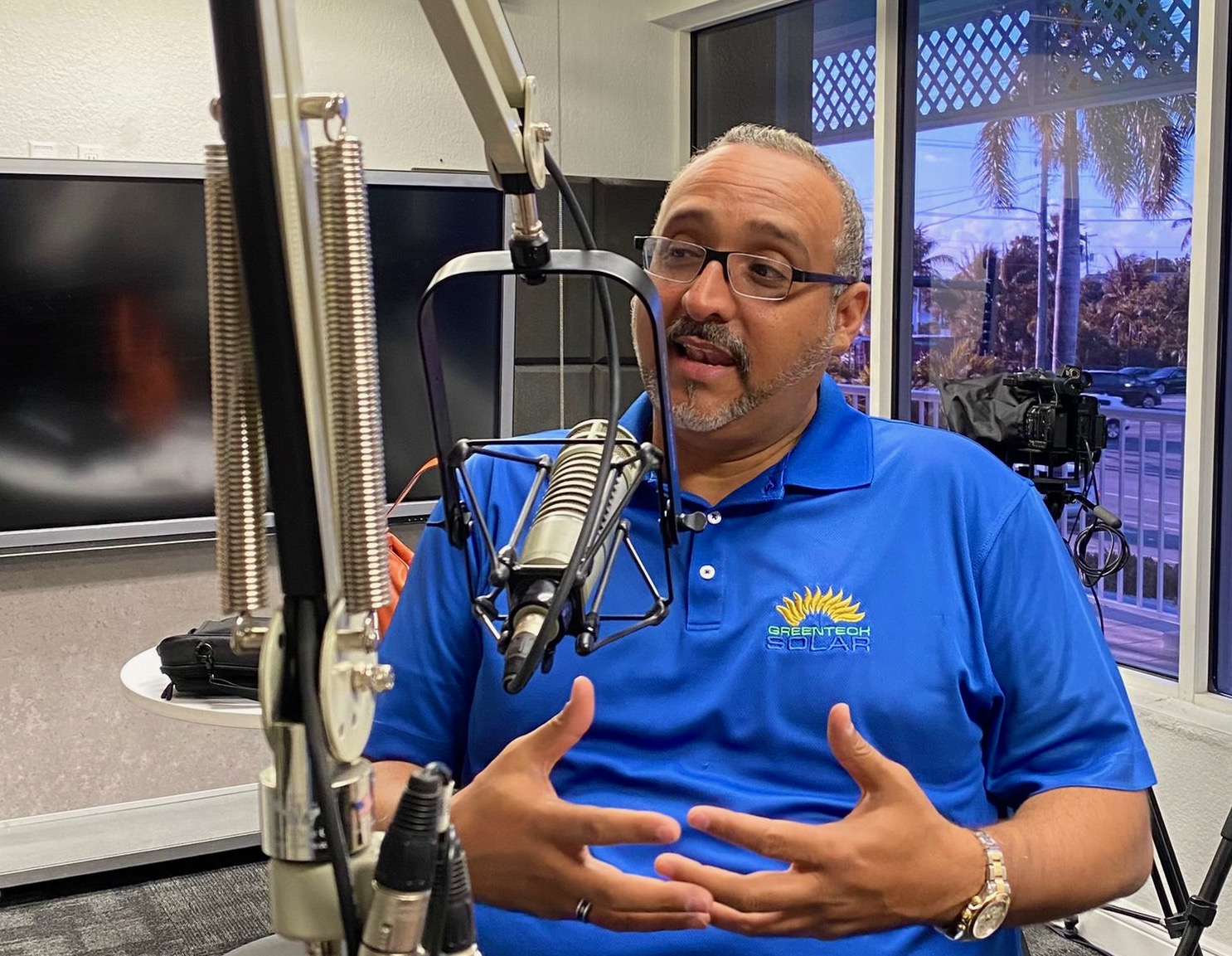
James Whittaker, CEO of sustainable development company GreenTech, said everyone in Cayman needed to prepare for the reality that climate change would impact quality of life and potentially alter the geography of the islands.
“Even if you look at the mid-level projections, it is going to redraw the map,” he said.
“We are going to have to retreat from the coasts a little bit but that doesn’t mean the island becomes uninhabitable, particularly if we change the way we develop.”
Whittaker argues that how we build will be just as important as location.
The house of the future?
GreenTech has designed a ‘climate proof’ cottage which it aims to develop as a model home that can demonstrate what sustainable, safe housing, capable of withstanding the conditions of Cayman in 2050, should look like.
The design, shared with the Compass, features a wash-through bottom floor and a combination of solar, wind and battery systems that would mean it creates more energy than it consumes. All the building materials will be sustainable and the home is designed to withstand a Category 5 hurricane.
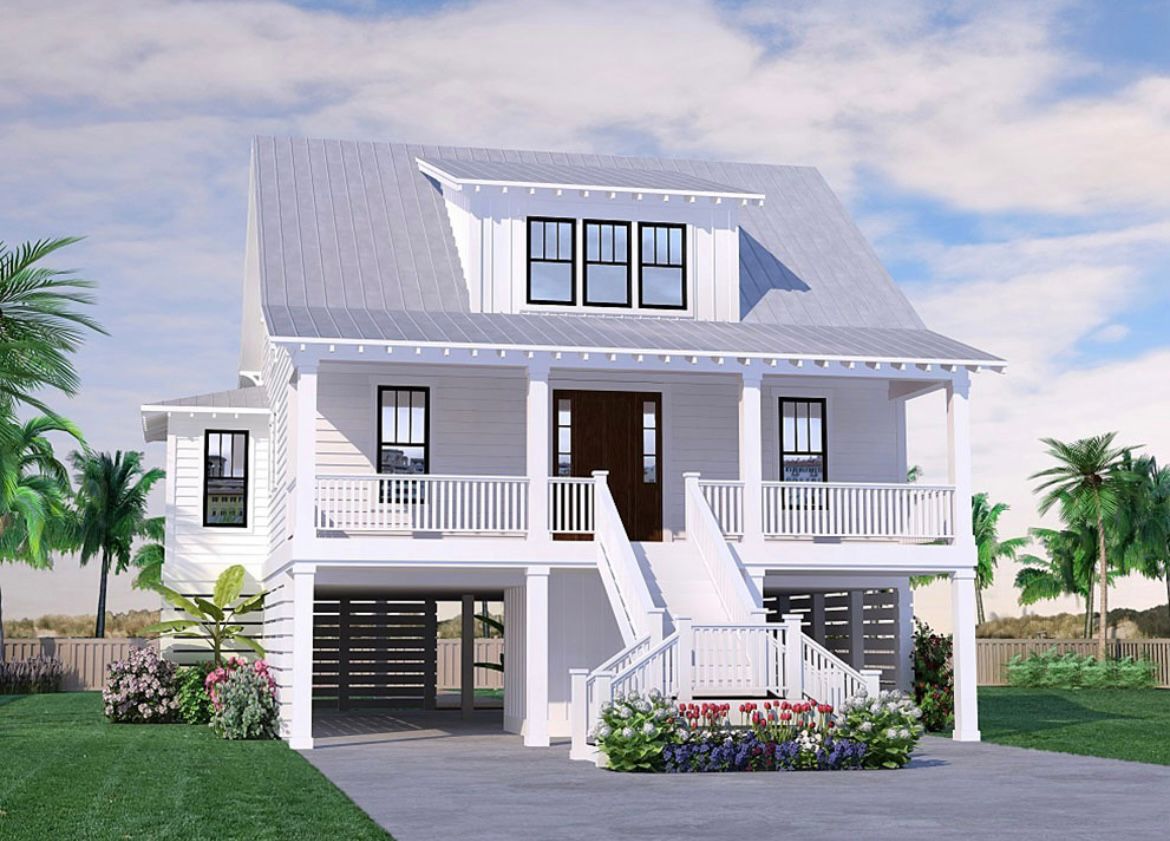
Whittaker said he drew on some of the ‘old wisdom’ from Cayman’s past as part of the process – designing the house to take advantage of natural light and prevailing breezes to lessen the need for electric lights and air- conditioning.
Combining that with cutting-edge modern technology – including power wall batteries, smart panels that digitally control energy usage and hydro panels that produce drinking water – he believes he has the blueprint for the islands’ first truly climate-resilient home.
The initial plan is to make it a ‘vision house’, with a website attached that can demonstrate what can be achieved, and serve as both inspiration and a resource for developers and decision-makers.
While the three-bedroom home, with its electric vehicle charging station that can work in reverse and allow the car to power the home, has a Utopian quality, it is designed to be practical and affordable relative to Cayman’s inflated housing costs, said Whittaker. He believes it would cost around $500,000 to build – before land costs are considered – and could be constructed anywhere with 6 feet of elevation to be essentially resistant to the worst impacts of climate change.
“We want to show what is possible,” he said.
A vision for the country?
He doesn’t expect government to mandate all the features of the ‘vision house’ but he warns that Cayman’s building code will need to incorporate at least some of those concepts to be prepared for what the future holds.
Wash-through bottom floors – with key systems and living space reserved for higher stories – will need to be mandatory in some areas, he believes. An element of self-sufficiency in terms of energy and water supply will also be vital for homes in hurricane zones,
he said.
Whittaker cautions that some property owners – particularly in vulnerable canal-side developments – may need to look at redesigning their homes – with or without government mandates – to maintain insurability for the future.
“Most people think ‘climate change is going to really affect me when the water hits my front door’. No, it’s going to affect you about five decades before that, because insurance companies are just not going to insure this region anymore,” he said.
“If we change the way we build, we can change that.”
Government appears to be edging towards some of the same conclusions.
Progress on the updated Development Plan, which began under the last administration in 2018, has been slow. But Richard Mileham, one of the leaders of that project, said it will consider sea-level impacts and attempt to make the rules of engagement for new construction reflect the reality of the threats facing Cayman in the future.
The Plan Cayman team aims to create individual area plans for multiple regions within Grand Cayman which will factor in the specific data on elevations and sea-level threats to create bespoke setback regulations that help ensure future building happens in a controlled way.
Hurricane simulations will demonstrate threat
Climate scepticism still runs deep in some sectors of Cayman, however.
Simon Boxall, communications, public awareness and training officer at Hazard Management Cayman Islands, said the unit is working alongside the Department of Environment, the National Weather Service and others within the new Ministry of Sustainability and Climate Resiliency, to address a deficit of local data.
He said US government satellite radar data showed very clearly that sea levels were rising in the region. Maps from the US National Oceanic and Atmospheric Administration show around 1.3 feet of sea-level rise off Pinar del Rio on the west coast of Cuba over the last century, with similar impacts seen across the region. Boxall said this was very obviously connected to climate change and Cayman would clearly be impacted as well, especially as the phenomenon accelerates.
Listen: James Whittaker, Danielle Coleman and Simon Boxall on ‘Beyond The Headlines’
The CEO of GreenTech and the Director and Information Manager and Awareness and Communications Officer for Hazard Management joined Elizabeth Charles and James Whittaker on Rooster FM on Friday, 11 March.
Listen here:

The UK government recently funded an extensive sea-bed mapping project that will provide precise data on the underwater topography around Cayman.
And NOAA has agreed to run up to 120,000 simulations of hurricanes of different intensities, durations, wind speeds and paths of approach to exhaustively assess the threat level.
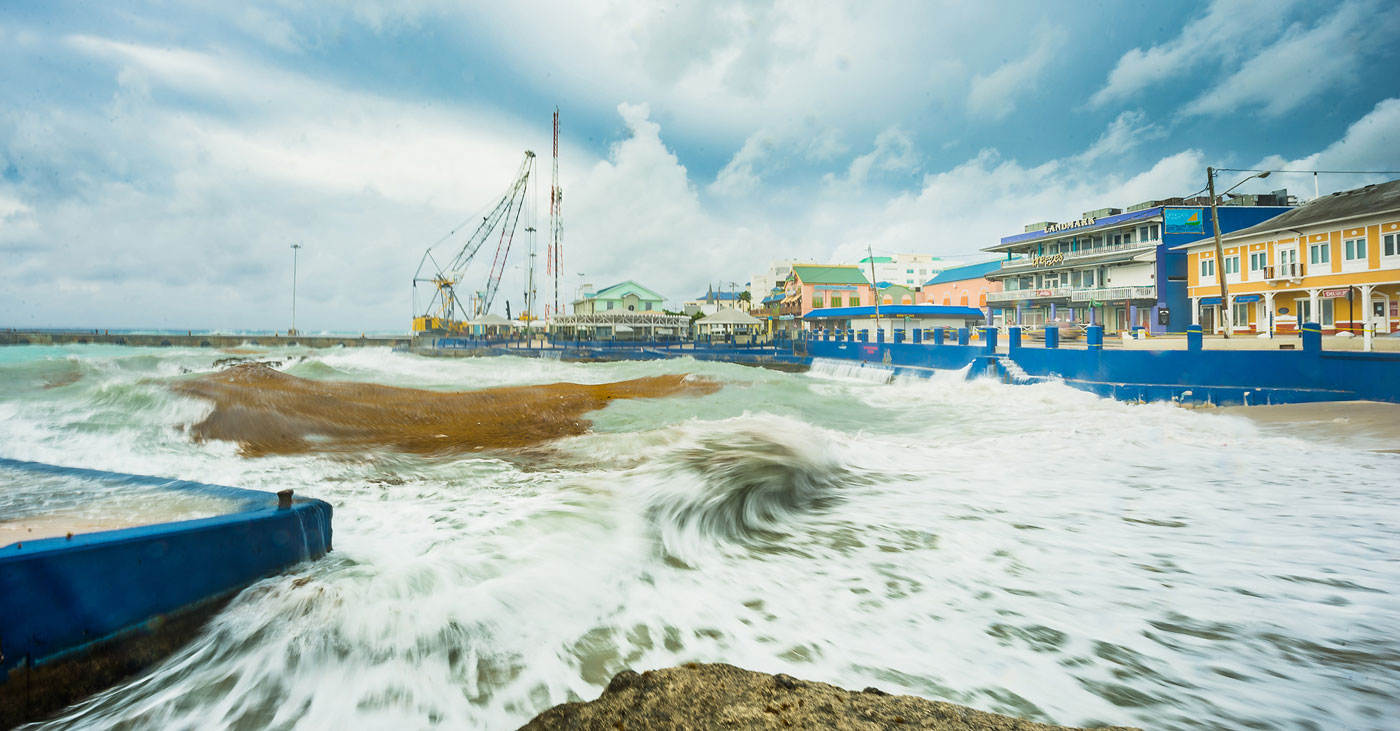
Those simulations can factor in sea-level rise effects on storm surge and wave impact and can even assess the potential impact of tsunamis. The data could be synthesised to provide a coherent analysis of the spectrum of threats facing the island and highlight the key ‘at-risk’ areas.
With that data in hand, Boxall said Hazard Management would be in a much-better position to provide specific advice to inform the planning and development process.
The Department of Environment is currently also working with UK-funded consultants on a climate ‘risk analysis’.
Environment experts seek influence on planning process
Despite those projects, concern remains that the planning board could be operating in a vacuum, independent of that data and expertise. The absence of environmental advocates, sustainability experts, researchers or officials on either the Central Planning Authority or a recent review committee set up to revise planning legislation has raised further questions.
Premier Wayne Panton, who is also minister for sustainability and climate resiliency, insisted his government would seek broad input before any legislative changes are made. Speaking at a press conference on 18 March, he said the review panel would not have exclusive authority over changes to the new law but offered no explanation over why technical experts from his ministry were not on it.
In terms of the development planning process, there appears to be more collaboration.
Mileham told the Compass that his team is working very closely with Panton’s ministry as it seeks to progress that project.
Boxall believes there is room for greater synergies in future – once the data-collection-and-analysis process has taken place.
“When Hazard Management is in a position to actually make informed scientific-based conclusions about likely impacts, we would like to try to inform the planning and development process,” he told the Compass as part of our ‘Beyond the Headlines’ news show on Rooster FM earlier this month.
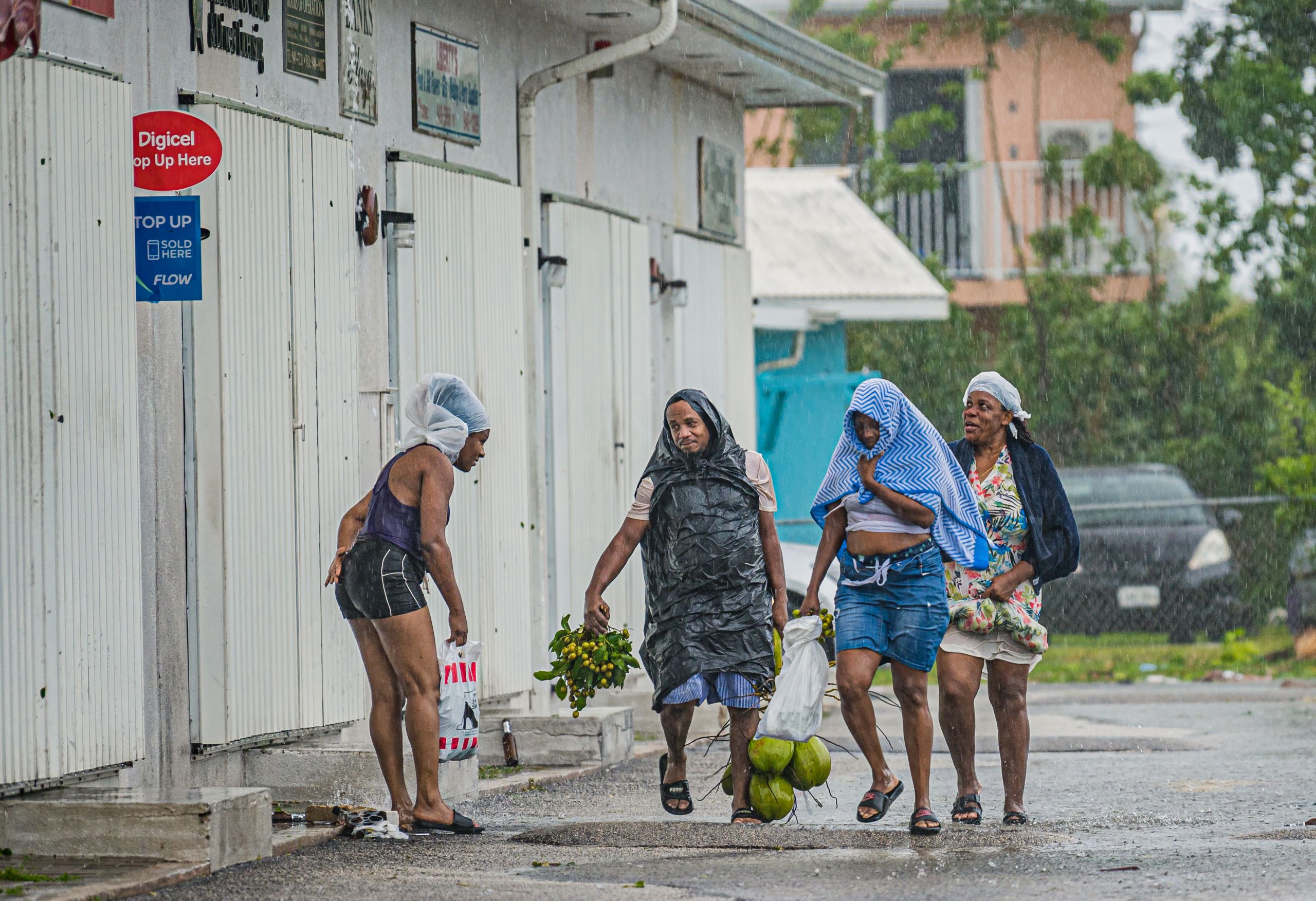
“We’d like to possibly be on the planning board, helping to make decisions and letting people know, ‘these are the risks, these are the probabilities, this is the likely [time] period for water entering into a house and you having 4 feet of water in your kitchen.’”
Danielle Coleman, director of Hazard Management, said the new ministry had brought many of the key agencies together under one roof and inspired greater collaboration in addressing climate impacts.
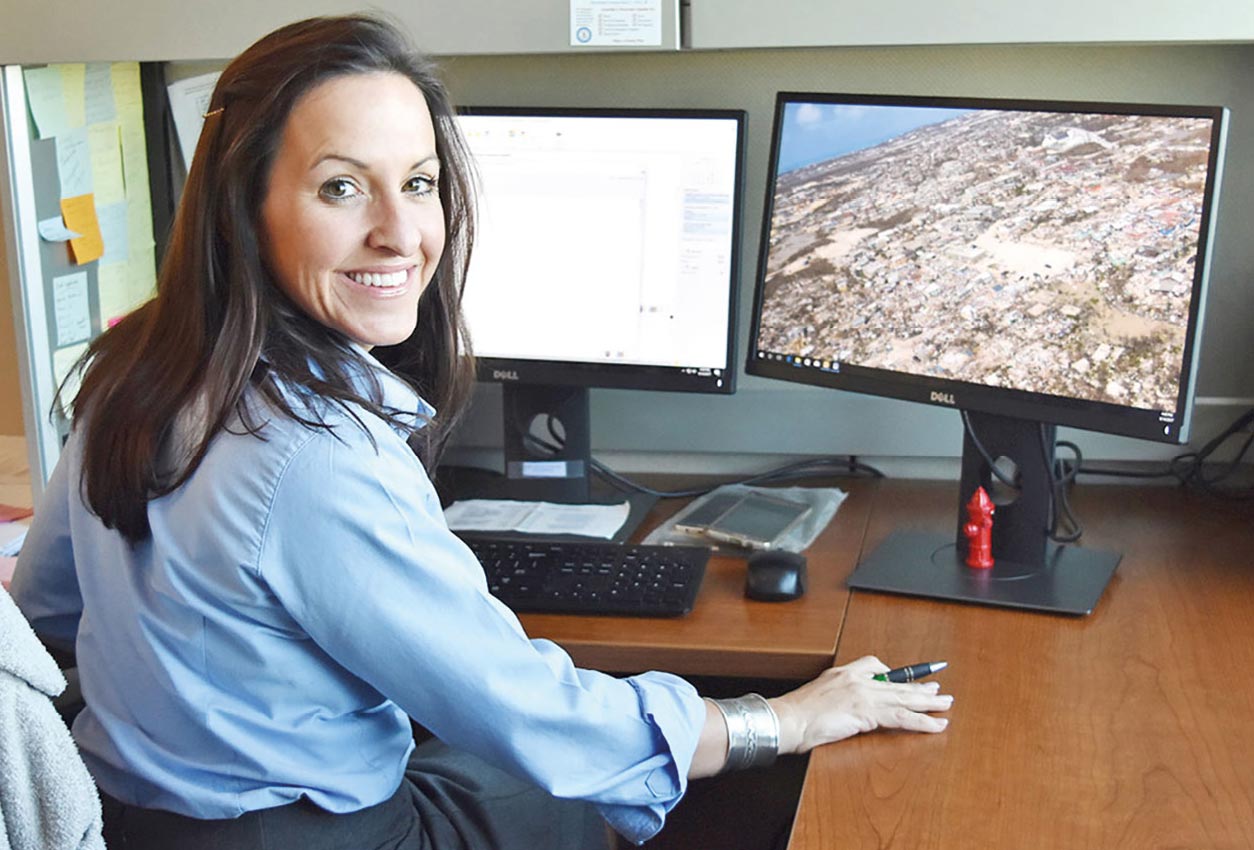
She said the attitude to climate threats in Cayman was changing, with young people in particular demanding action. And she believes government is responding to that call and will continue to do so.
Whittaker acknowledged frustration at the pace of change from government. But he said developers, businesses and individuals could act in their own best interests without waiting for regulation.
“We have to understand the problem, we have to accept that these things are going to happen, we have to figure out what we can do individually and as a country to mitigate them. It is just about accepting that this is a reality, this is what the data shows, and there are things that we can do to mitigate that.”
James Whittaker, the Cayman Compass journalist, and James Whittaker, CEO of GreenTech, are not related.
Related Videos









These issues are not exclusive to Cayman and as well as considering man-made remedies, it is also important to properly incorporate and protect natural solutions. Recently in Miami, Biscayne residents opted for softer options and compelled their local officials to act:
https://urbanland.uli.org/sustainability/opting-for-softer-infrastructure-to-reduce-miamis-coastal-flood-risk/
It is critically important that the relevant authorities, private sector organisation’s locally and abroad as well as communities affected are included in the decision making process regarding climate change and sustainable development goals to properly understand and recognise both flood and coastal zones which are either unsuitable for development or may damage our biodiversity, agriculture, fishing or tourism product, in order that national solutions can be achieved with future generations in mind.
Long time coming!